


A tennis dress can look beautifully considered on the hanger, then feel slightly off once you start serving, sprinting and reaching for a wide ball. Finding the best tennis dress for short women comes down to proportion, not compromise. The right piece should feel streamlined through the body, stay composed through movement and let your personal style come through without overwhelming your frame.
For a shorter player, small design choices carry more weight: where the waist sits, how the skirt falls, the scale of the straps and whether the built-in shorts move with you. These are the details that turn a dress from simply pretty into a reliable part of your match-day uniform.
What makes a tennis dress flattering on a shorter frame?
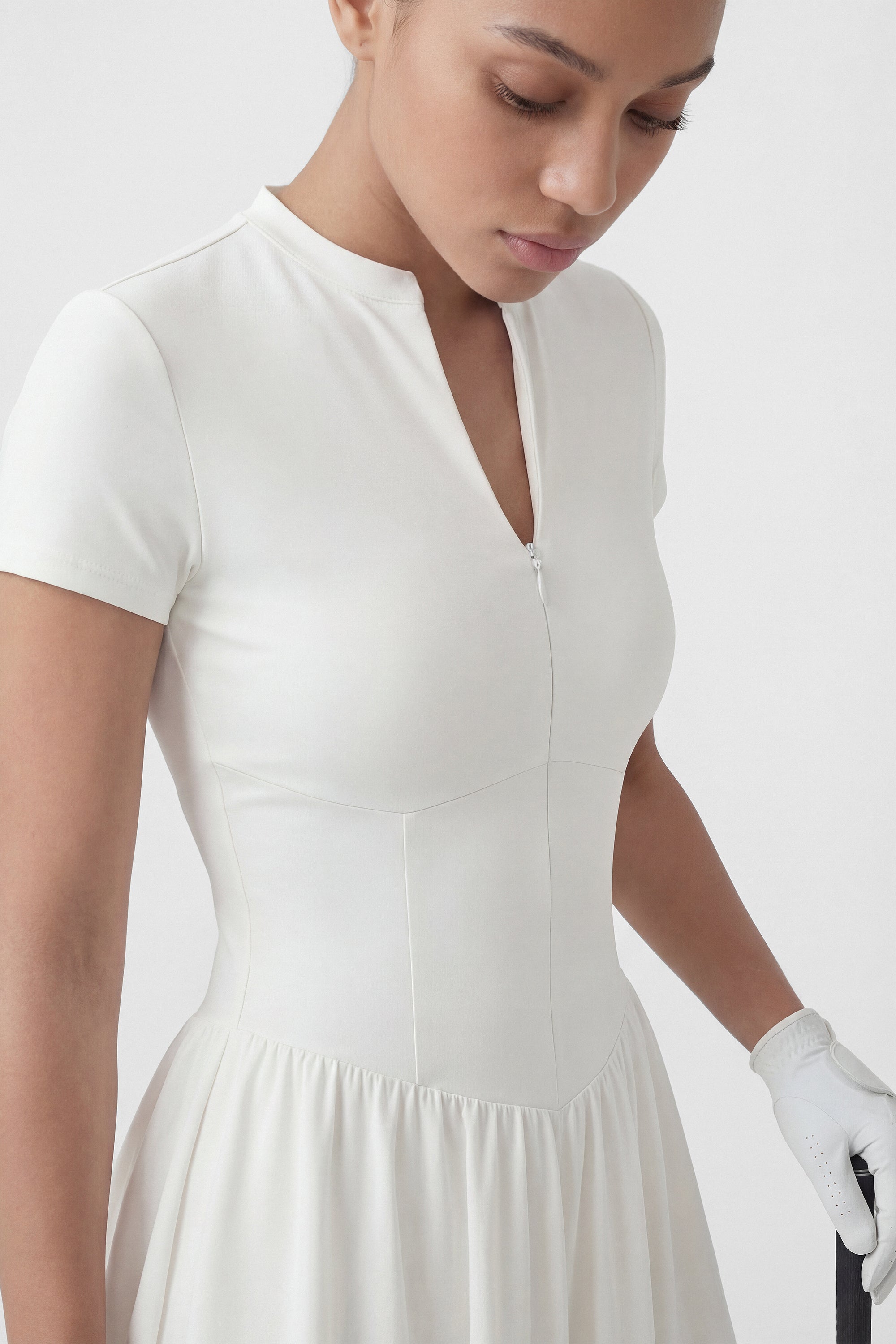
The most considered dresses create a clear vertical line while keeping the silhouette light. This does not mean every dress needs to be ultra-short or tightly fitted. It means the components work in proportion, so the eye moves easily from shoulder to hem rather than stopping at excess fabric, a low waist seam or a skirt that sits too heavily.
A clean, close-to-the-body upper section is often a strong place to start. It gives shape without feeling restrictive, especially when paired with a skirt that has enough ease for split steps, serves and quick changes of direction. Look for a dress that feels balanced rather than busy. Minimal panels, clean finishes and a considered neckline tend to feel more polished both on court and after the last set.
Prioritise a higher waist placement
Waist placement is one of the most useful fit cues. A seam or shaping detail that sits at your natural waist, or just above it, can create a longer-looking leg line while keeping the dress neat through the middle. A dropped waist can be elegant in the right design, but it may make the torso appear longer and the legs appear shorter.
Empire-style lines can also work well when they are subtle and the skirt is not overly voluminous. The goal is definition, not decoration. Try moving through a few shadow swings and a deep reach when assessing the fit. The waist should stay where it belongs rather than riding up or folding over.
Choose a hem that feels intentional
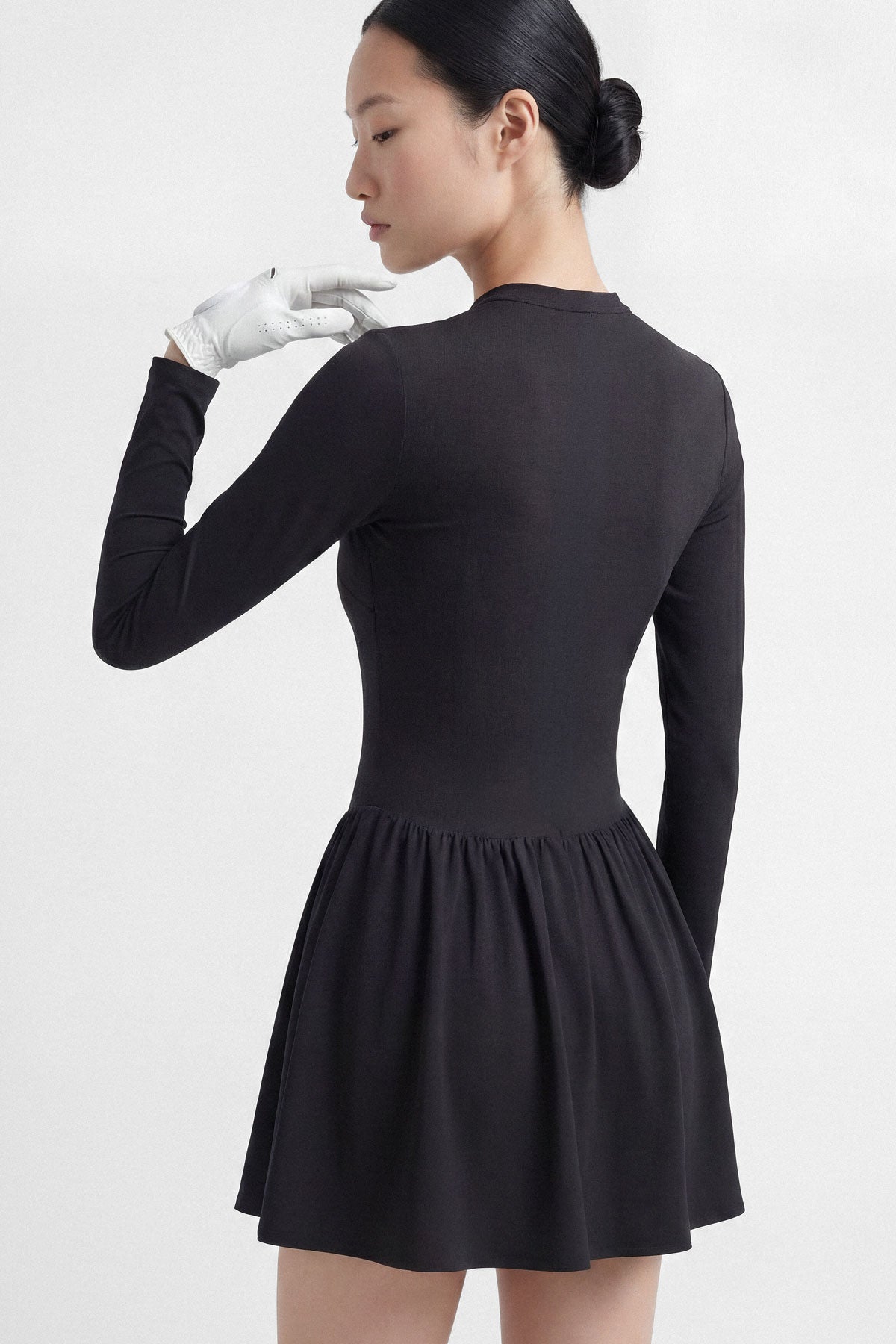
Hem length is personal, and the right choice depends on where you feel most comfortable. For many shorter players, a hem that finishes around the upper to mid-thigh creates a crisp, sport-specific proportion. It keeps the dress visually light and gives the built-in shorts room to do their job without becoming the focus.
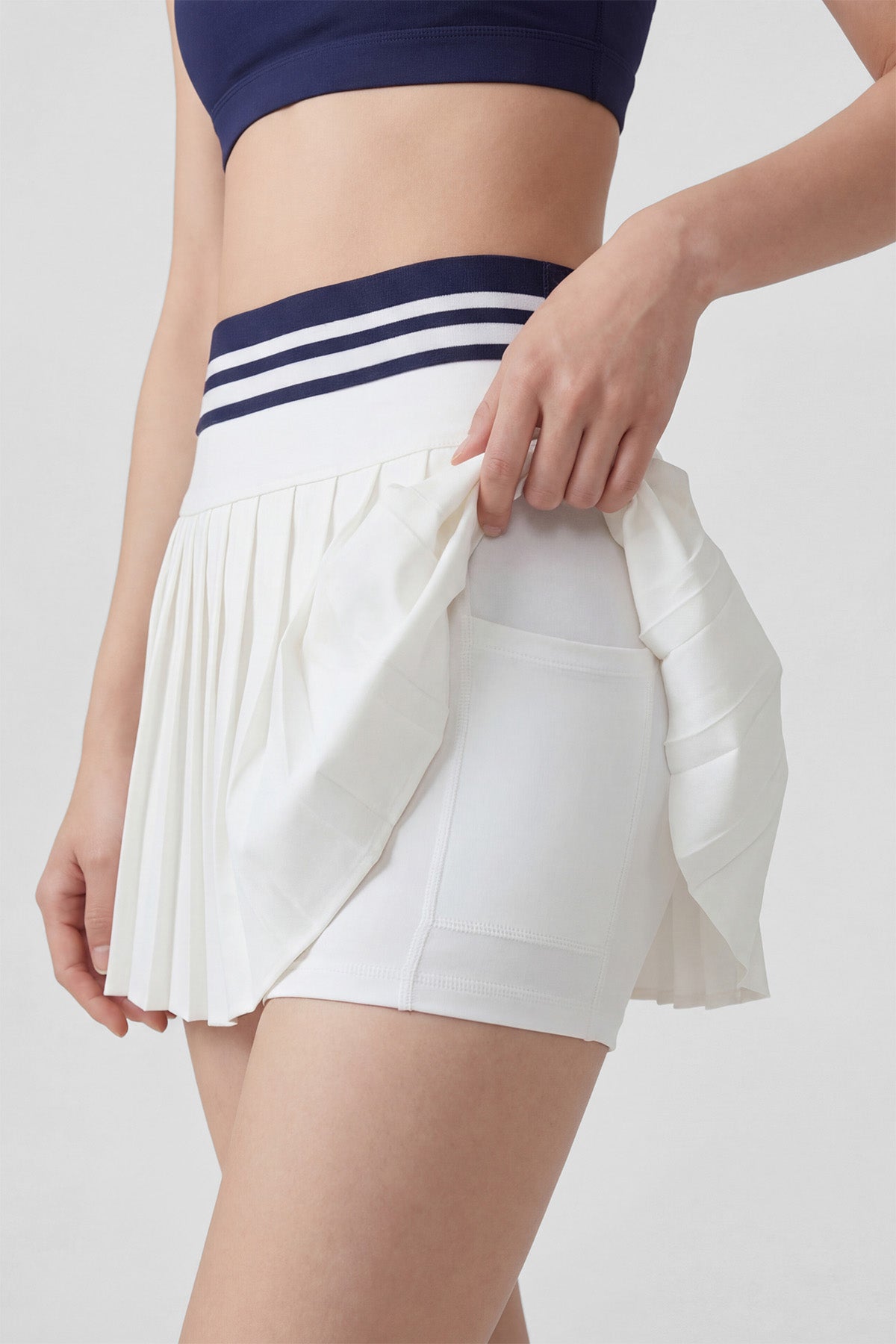
Very long or densely pleated skirts can sometimes dominate a smaller frame, particularly if the fabric is structured. That does not rule them out. A softer, lighter skirt with a clean fall can still look refined at a little more length. What matters is that the hem feels considered in motion, not like an afterthought.
If you prefer more coverage, look for a silhouette with a gently flared skirt rather than a boxy straight cut. The movement will feel easier and the overall line will remain more defined.
Look at the top half first
A dress is often decided by its bodice. It is where support, comfort and proportion meet, and it is the part you notice most during a match.
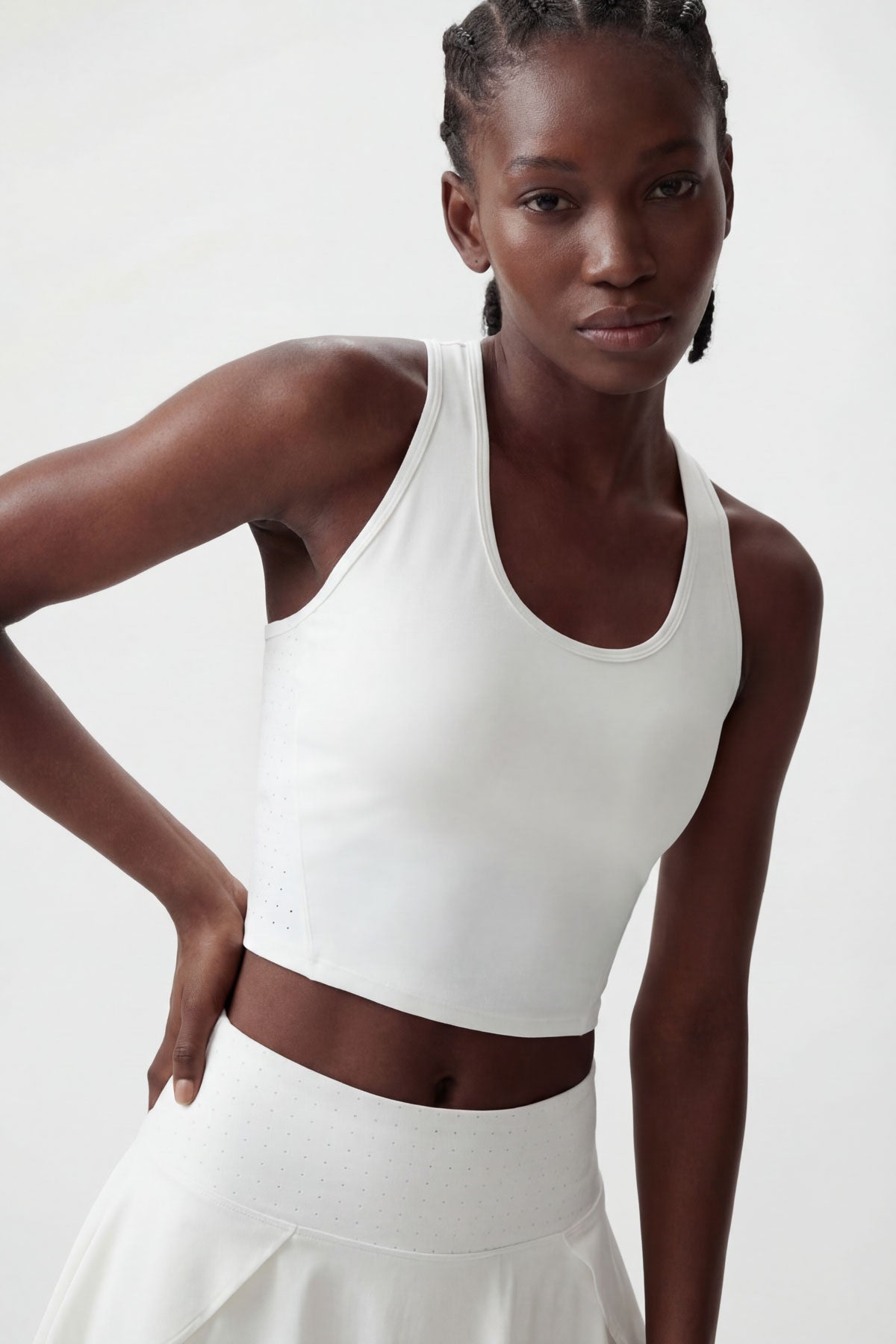
Narrow to medium-width straps can create a clean shoulder line, while adjustable straps are especially useful if standard proportions regularly feel too long through the torso. Being able to fine-tune the strap length helps position the bust, armholes and waist where they should sit. It also reduces the chance of the neckline shifting as you serve.
A square neck, modest scoop or high neck can all suit a shorter frame. The best option is the one that gives enough coverage and feels natural with your shoulder shape. If you favour a halter or racerback, check that it does not pull at the neck or leave too much fabric gathering across the back. A sleek back detail can add interest, but it should still allow a full range of movement.
Removable bra cups are another thoughtful feature. They let you adjust the level of shaping and simplify getting ready for a hit, particularly for sessions that run straight into the rest of your day. The fit should feel secure without drawing attention to itself.
Built-in shorts are not a secondary detail
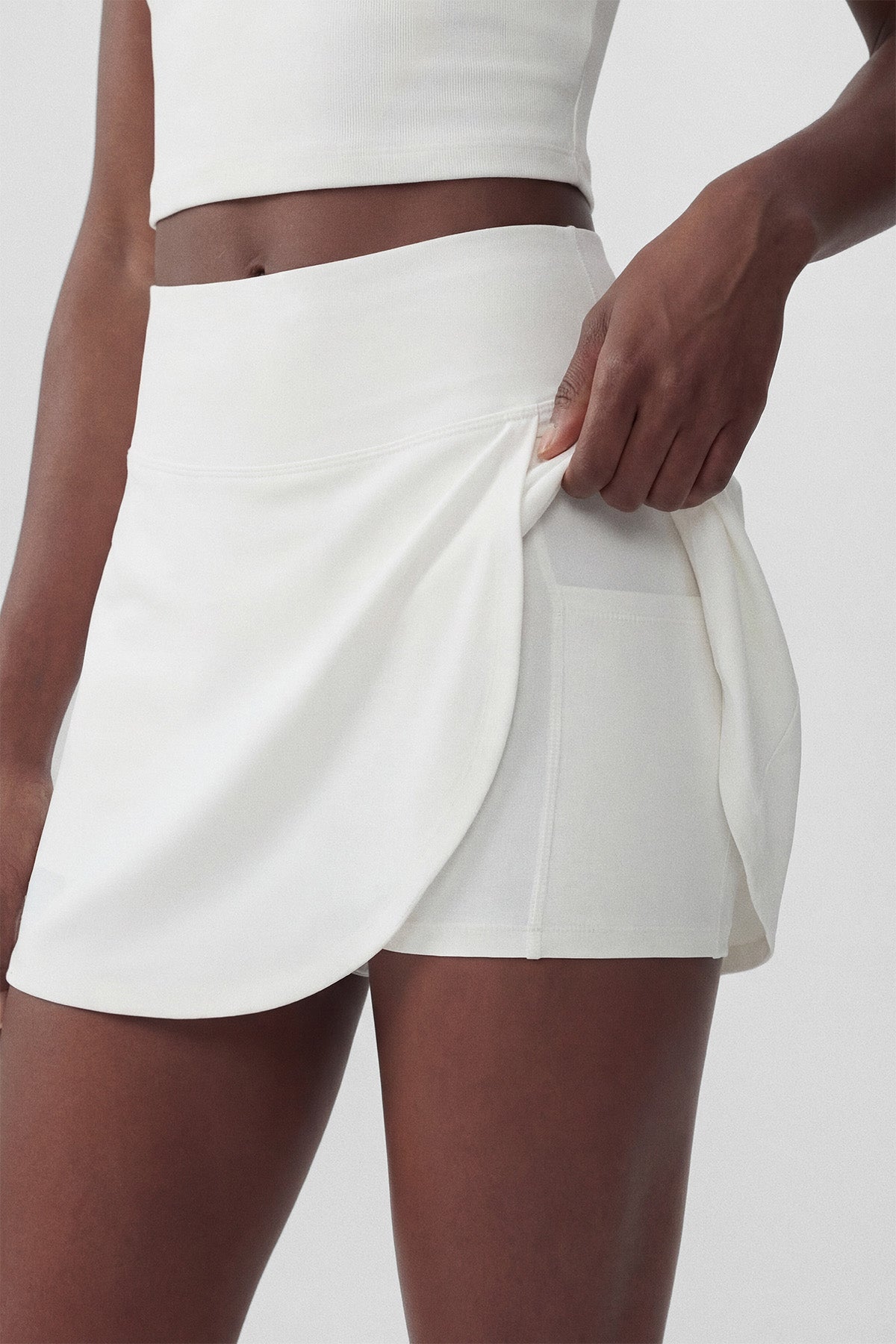
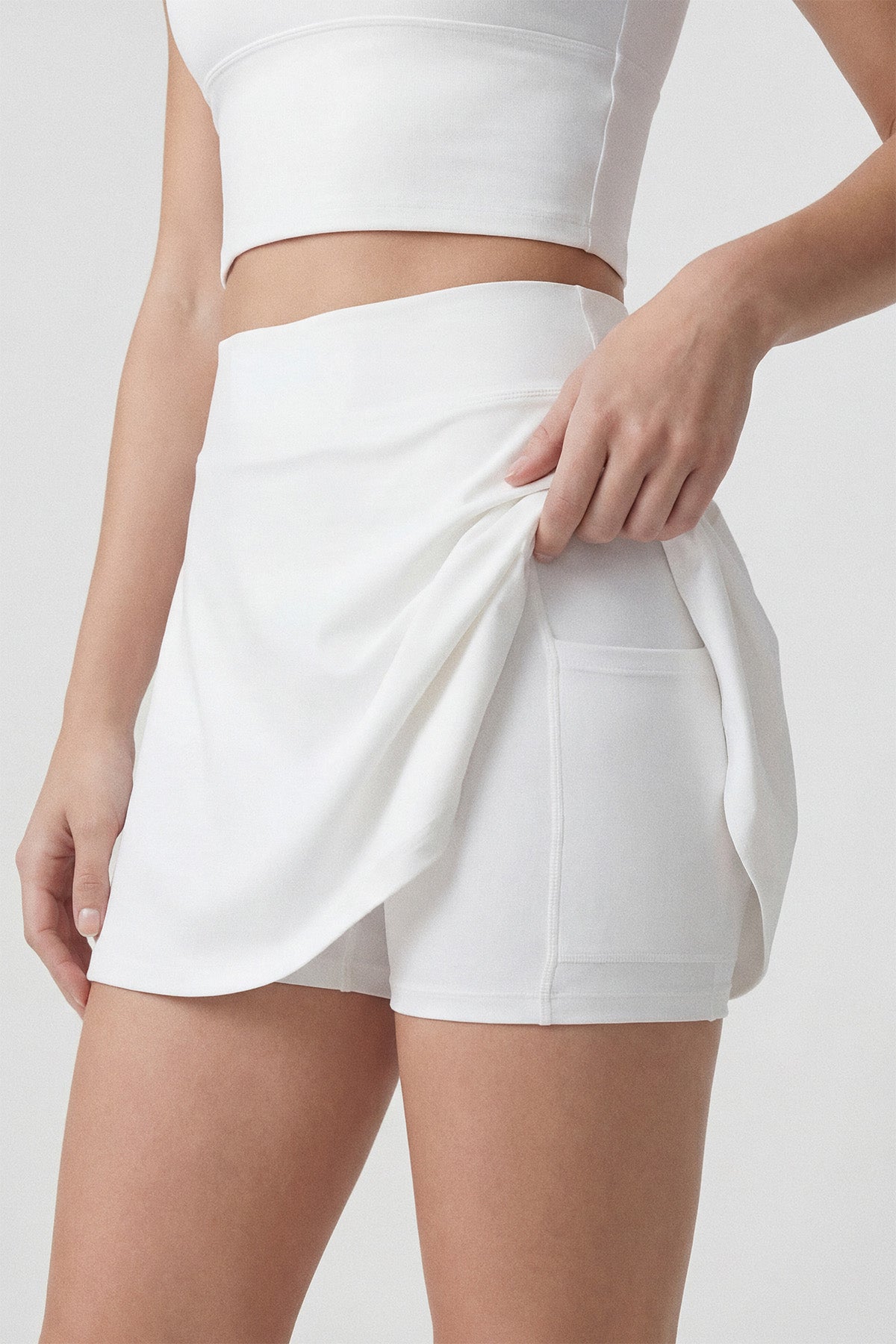
For tennis, the dress only works as well as the shorts underneath it. They should feel smooth at the waist, stay put through lateral movement and offer enough coverage for a low ball or a full stretch at the net.
High-waisted built-in shorts can create a particularly tidy finish beneath a dress, especially where the outer layer has a raised waist seam. Look for a waistband that lies flat rather than cutting in or rolling. The ideal fit feels quietly supportive, with no need for constant adjustment between points.
Pockets are worth considering, too. A discreet side pocket that holds a tennis ball keeps the silhouette practical without sacrificing the clean lines that make a dress so easy to wear. For social tennis or padel, it is a small detail that quickly becomes non-negotiable.
Fabric and colour can change the proportion
Technical fabric should support the shape of the garment, not add bulk to it. Lightweight, breathable materials with a smooth finish tend to drape more cleanly and feel less distracting during play. Micro-perforation, placed with restraint, can bring texture and airflow while preserving an elevated appearance.
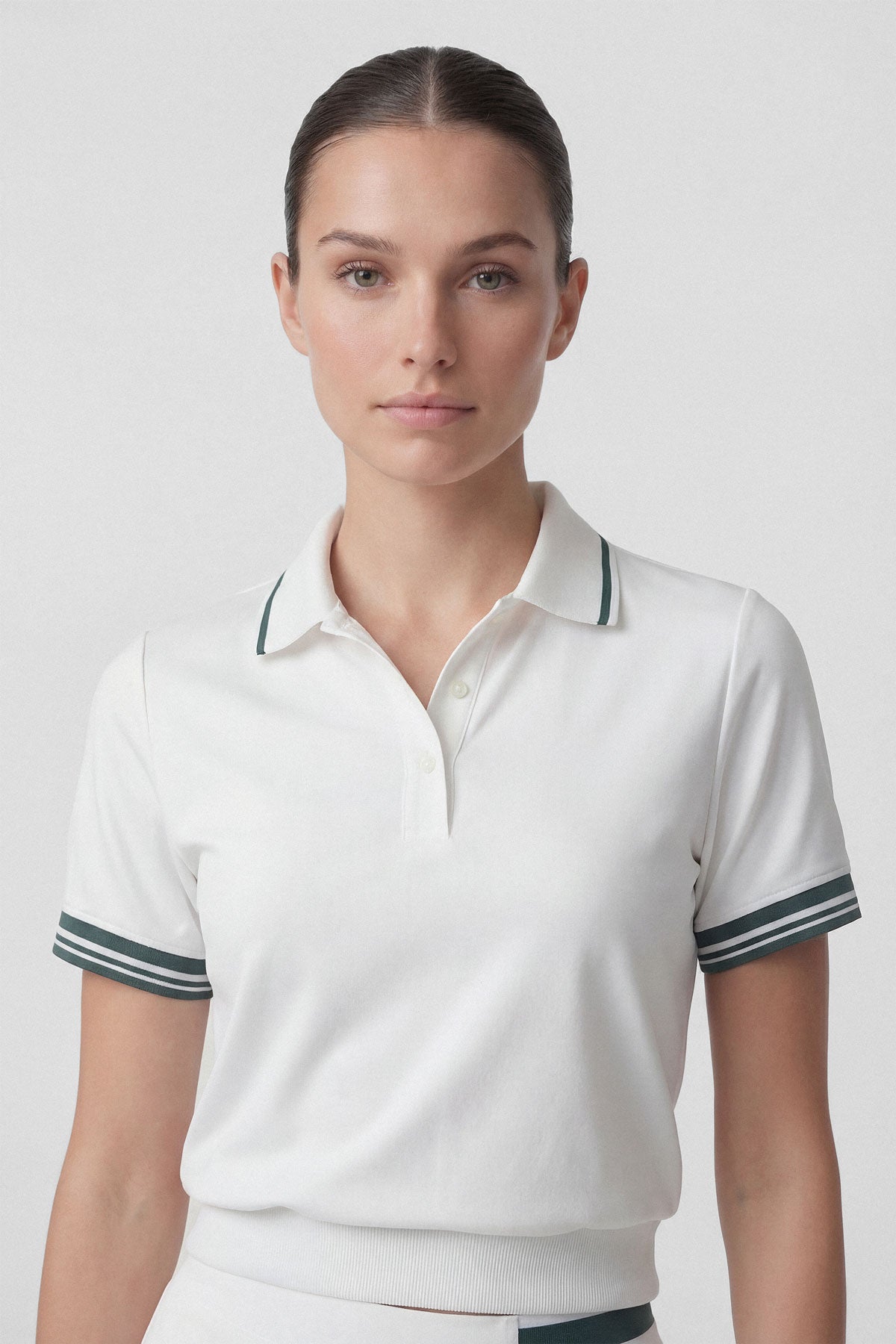
Colour also plays a role. A single colour from shoulder to hem creates an uninterrupted line and makes a dress feel especially streamlined. Black, navy, deep green and chocolate can look sharp, while white and softer neutrals offer a classic club-sport feel. If you enjoy contrast, choose it with purpose: a fine trim, an understated piping detail or a tonal panel is often enough.
Large, high-contrast blocks of colour across the torso can visually break up the silhouette. They are not automatically off the table, but a more restrained layout usually feels easier to wear and more versatile beyond the court.
How to assess the fit before match day
Do not judge a tennis dress standing still in a fitting room. The real test is whether it maintains its shape during the movements your game asks of you. Raise both arms as if serving, bend to collect a ball, take a few quick side steps and sit briefly. Notice whether the straps slip, the shorts shift or the skirt catches.
Pay attention to the armholes. If they gape, the bodice may be too long through the upper body. If they dig in, a different strap shape or size could be a better option. Check the waist from the side as well as the front. A good dress should look just as composed when you are walking to the baseline as it does when you are facing the mirror.
It helps to try it with the shoes and socks you wear most often for tennis. Footwear changes the visual balance of an outfit. A low-profile court shoe can keep the look sharp and modern, while a bulkier style may make a clean, shorter hem feel even more important.
The best tennis dress for short women depends on your game
For regular singles, prioritise secure straps, breathable fabric, functional shorts and a skirt with freedom through the hips. If you play mostly social doubles, you may place more value on a refined neckline, an easy pocket and a silhouette that carries comfortably from court to coffee.
Padel can call for the same freedom of movement, with extra attention to shoulder mobility and ball storage. For club days where tennis blends into lunch or errands, a minimal dress in a versatile colour offers the most wear. This is where a piece designed with both sport and lifestyle in mind earns its place in your wardrobe.
At Common Player, the most useful perspective is to treat your dress as part of a complete court uniform, not a one-off outfit. It should work with your preferred visor, layer neatly under a light jacket and still feel like you when the racquet is back in the boot.
The best choice will not ask you to think about it after the first game. It will give you a clean line, practical confidence and one less thing to adjust when the next point begins.
Read more
Golf attire for women should move with your swing, meet club expectations and carry you from the first tee to the rest of your day in style with ease.
A country club outfit guide for women: polished tennis, padel and golf looks with practical layers, considered fabrics and dress-code confidence with ease.