


A good court wardrobe is not built around having more activewear. It is built around having the right pieces ready when a morning hit turns into lunch, or when a social round calls for something that feels considered from the first serve. Learning how to build a court wardrobe starts with one clear idea: every piece should earn its place through movement, comfort and a refined finish.
The result is a small, reliable rotation that feels like your own uniform - polished enough for the club, practical enough for match day and easy to wear beyond the court.
How to build a court wardrobe with a clear foundation
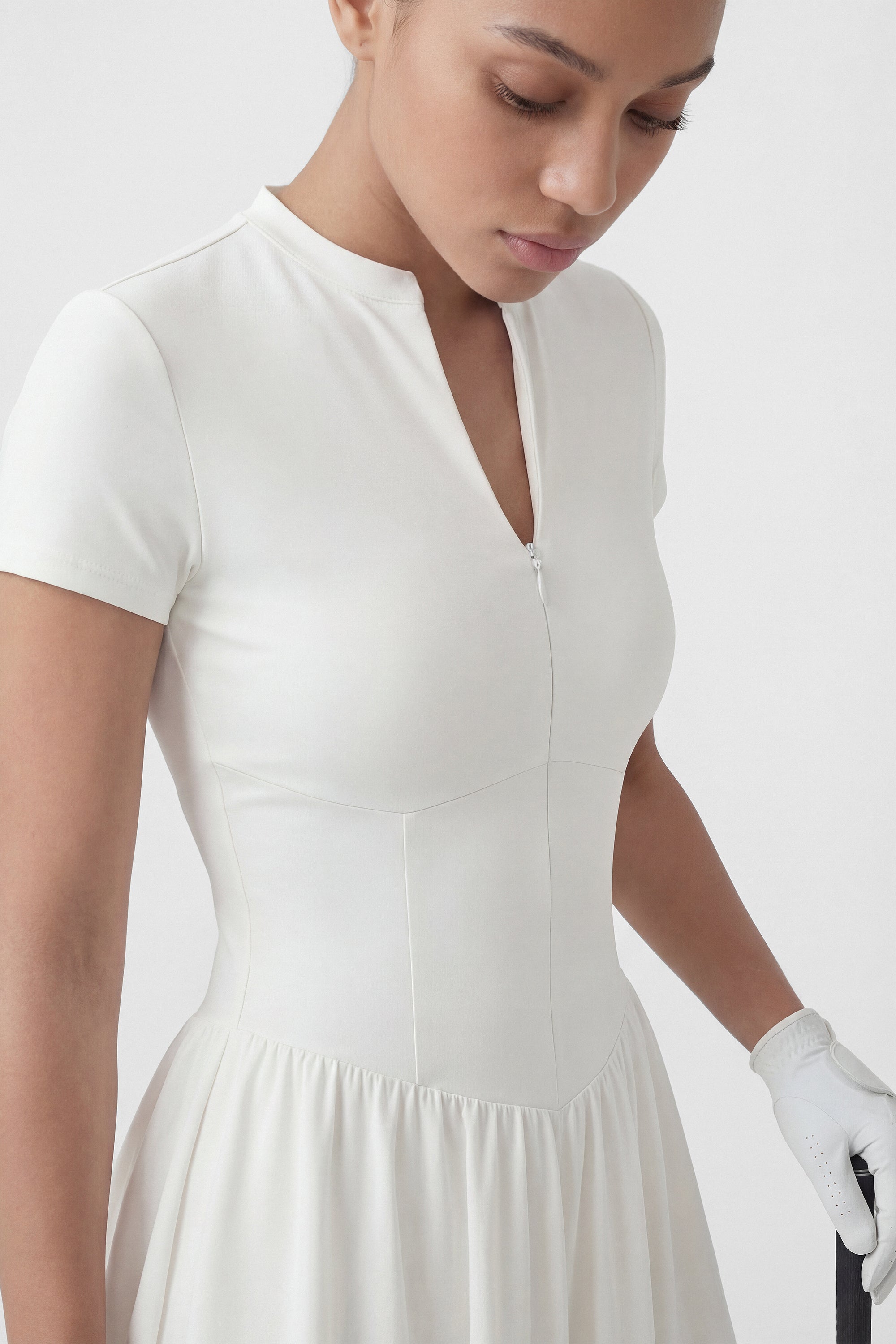
Start with the sports you actually play and the way you play them. A tennis wardrobe may need secure ball storage and silhouettes that stay composed through fast directional movement. Padel often calls for the same freedom, with layers that suit changing conditions and long social sessions. Golf has its own rhythm, where a polished collar, considered length and easy mobility matter from the first tee to the clubhouse.
There is plenty of overlap, but not every piece needs to do every job. A wardrobe becomes more useful when you choose a few versatile foundations, then add sport-specific details where they count.
Begin with two or three core silhouettes you know you will reach for. For some players, that is a structured polo, a high-waisted skort and a performance dress. For others, it may be a fitted crop top, a skirt with built-in shorts and a lightweight layer. The goal is consistency. When the base shapes work together, getting dressed for play feels effortless rather than overthought.
Choose a restrained colour palette, too. Black, white, deep navy, soft stone and considered neutral tones make it easier to repeat and rework pieces without every outfit looking identical. You can then introduce one seasonal colour or subtle contrast detail if that feels like you. A court wardrobe should reflect personal style, not erase it.
Prioritise function where it is felt
The most elegant court look can fall short if it distracts you while you play. Fit, fabrication and construction are not secondary details. They determine whether a piece stays with you through a serve, a sprint to the net or a full round in the sun.
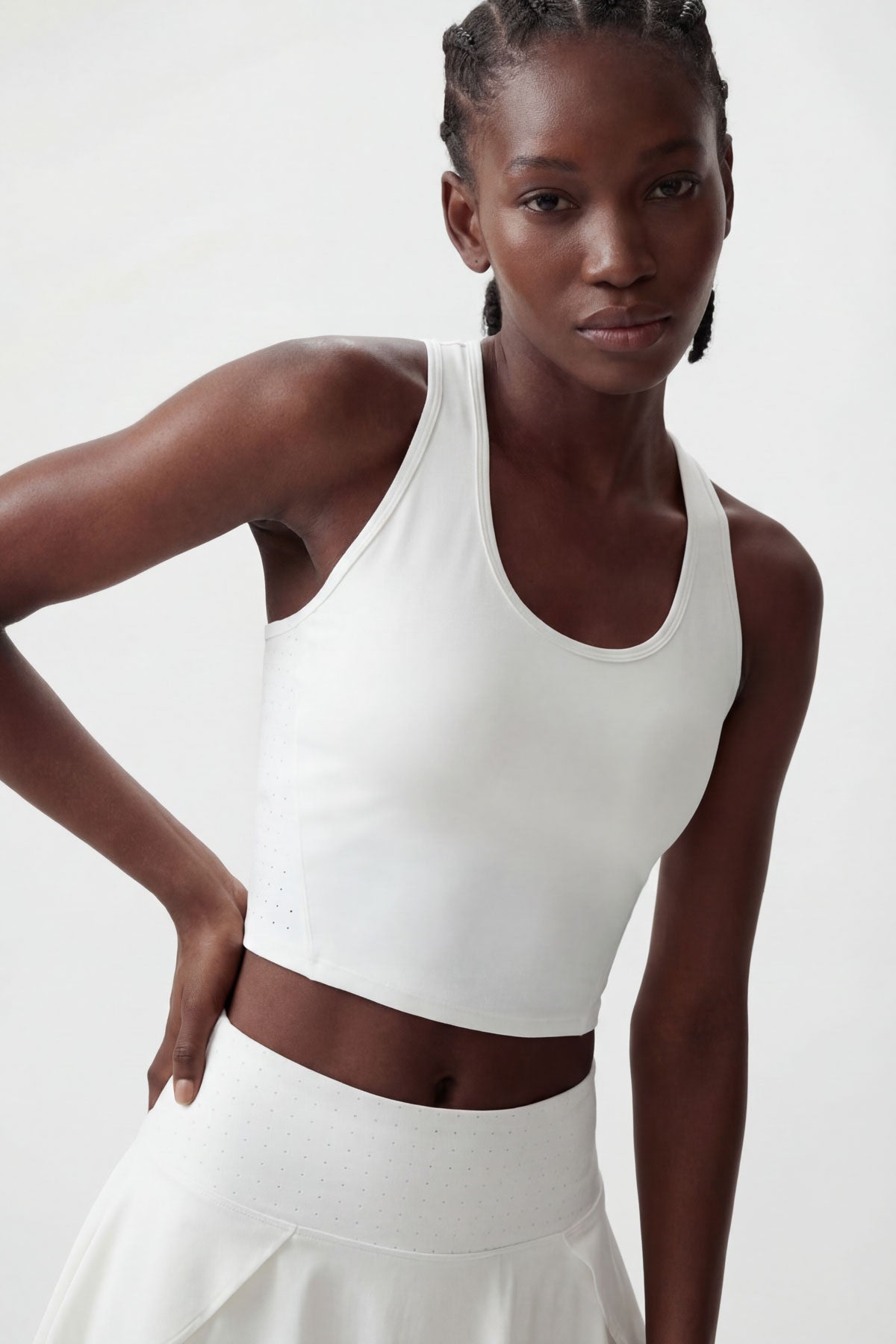
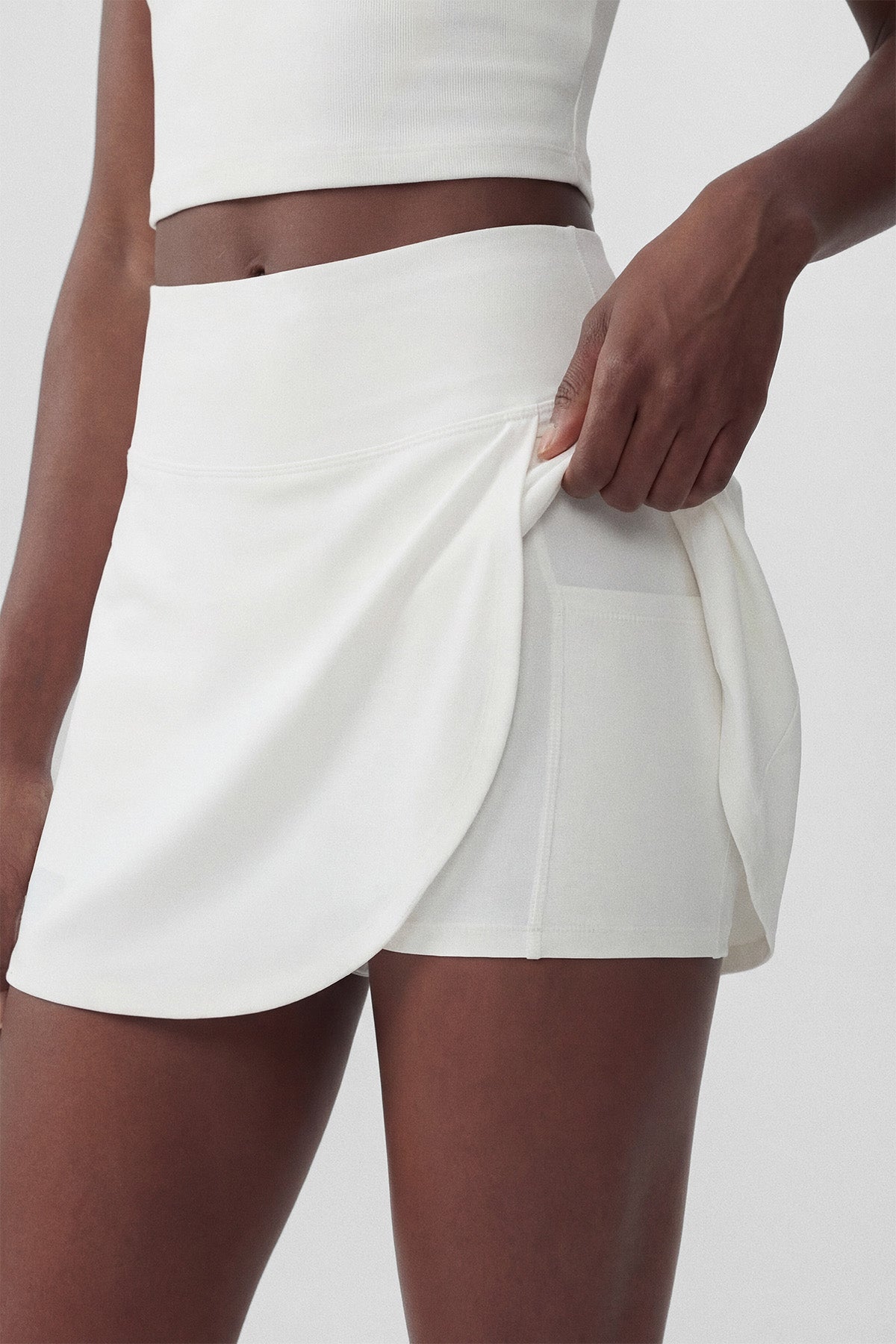
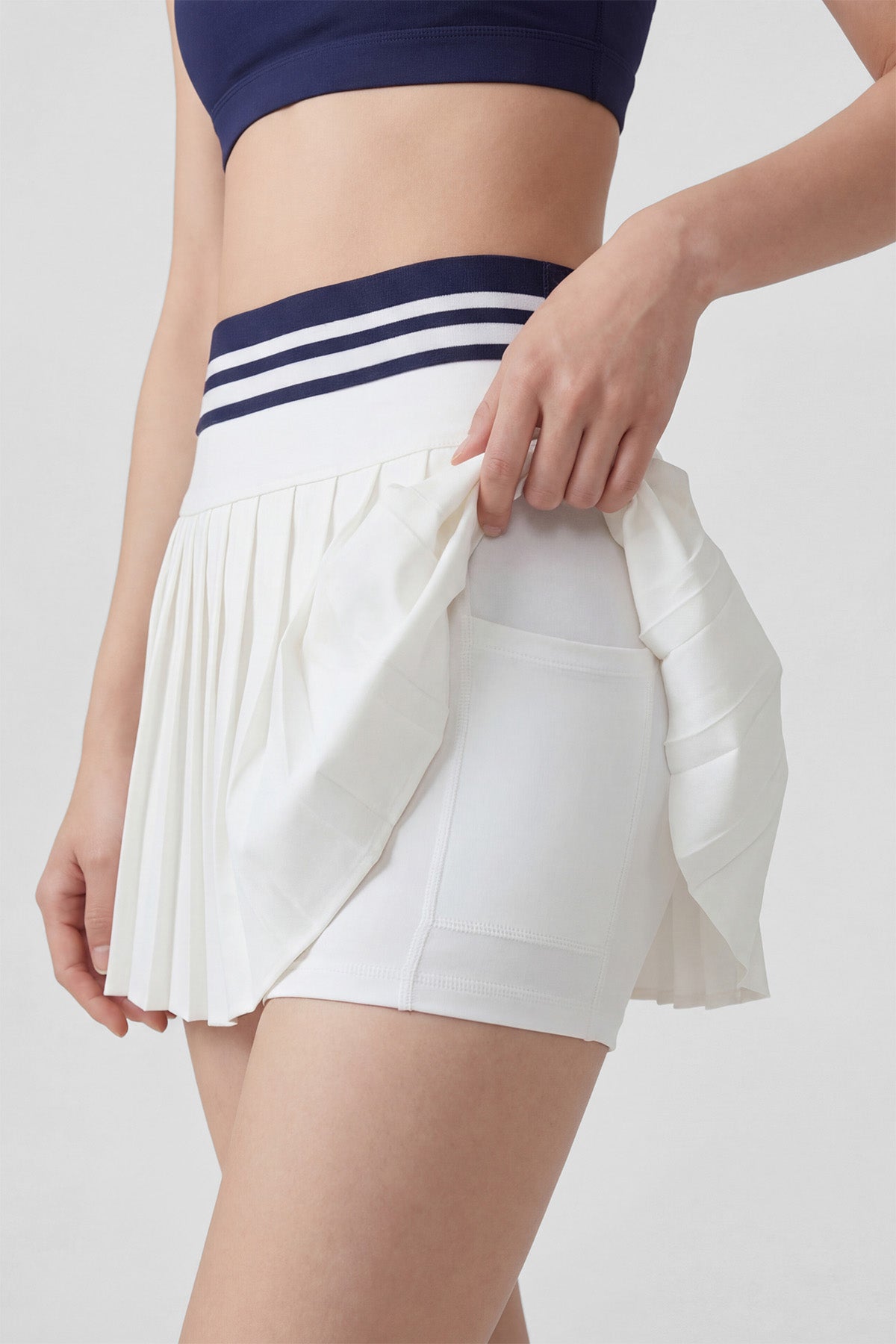
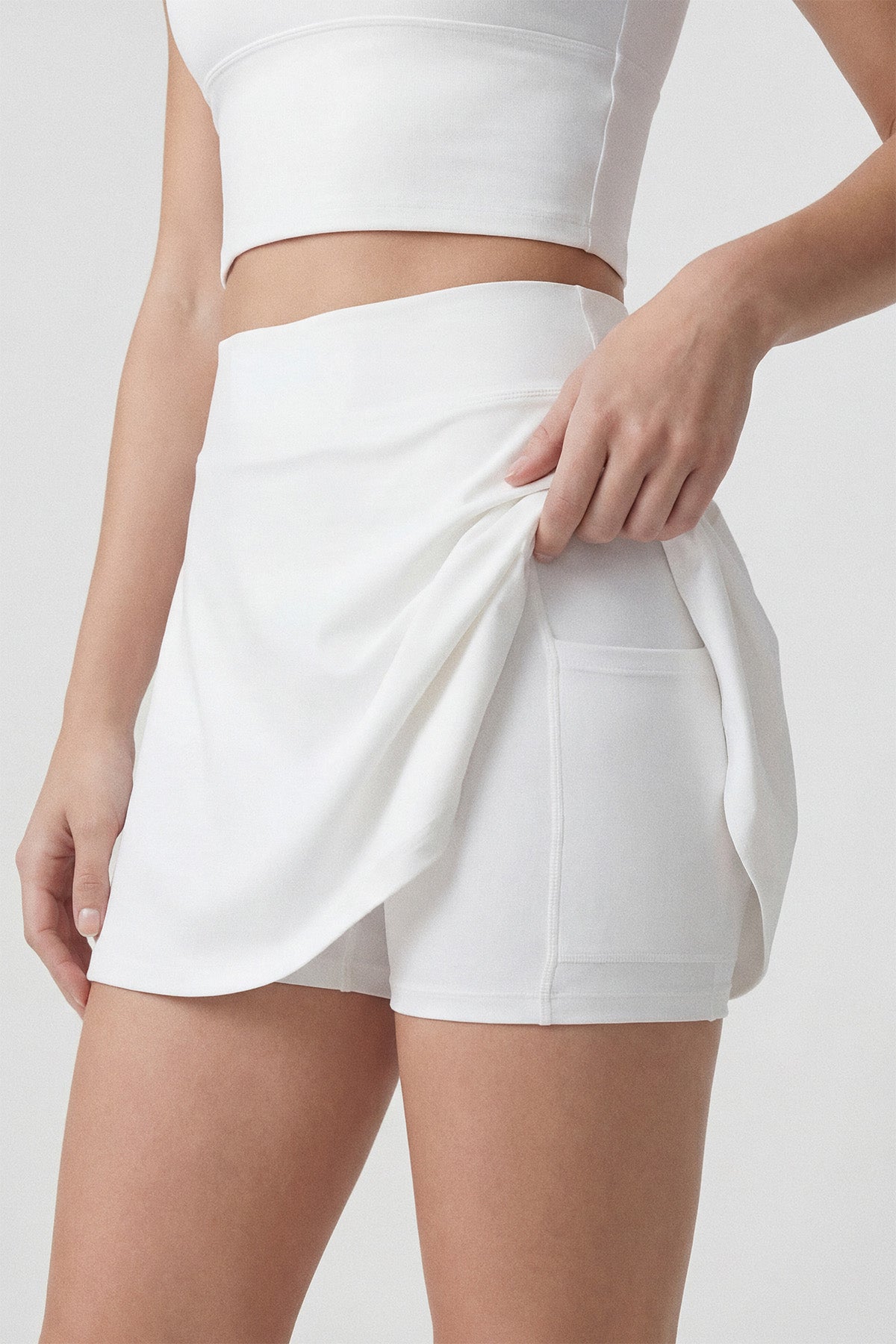
Look first at the features you use in real life. Built-in shorts offer coverage and a cleaner finish under skirts and dresses. Side pockets are useful when you want a ball close at hand. Adjustable straps allow a more personal fit, while removable bra cups give you flexibility in how you wear a top or dress. Breathable micro-perforation can be especially welcome when the day warms up.
Support is personal, so consider the pace of your sport and what feels right for you. A lower-impact practice session, a social padel match and a competitive tennis fixture may call for different levels of structure. There is no single ideal solution. The best choice is the one that lets you focus on the game rather than adjusting your outfit between points.
Length matters in the same way. A shorter skirt may be your preference for tennis, while a more classic skort or tailored dress can feel right for golf. Rather than following a formula, build around the proportions that make you feel composed and unrestricted.
Create outfits, not isolated purchases
A court wardrobe becomes genuinely useful when each new piece works with at least two others already in your rotation. Before adding a top, ask what bottoms it pairs with. Before choosing a dress, consider the layer, socks, cap and outer piece that make it work across different conditions.
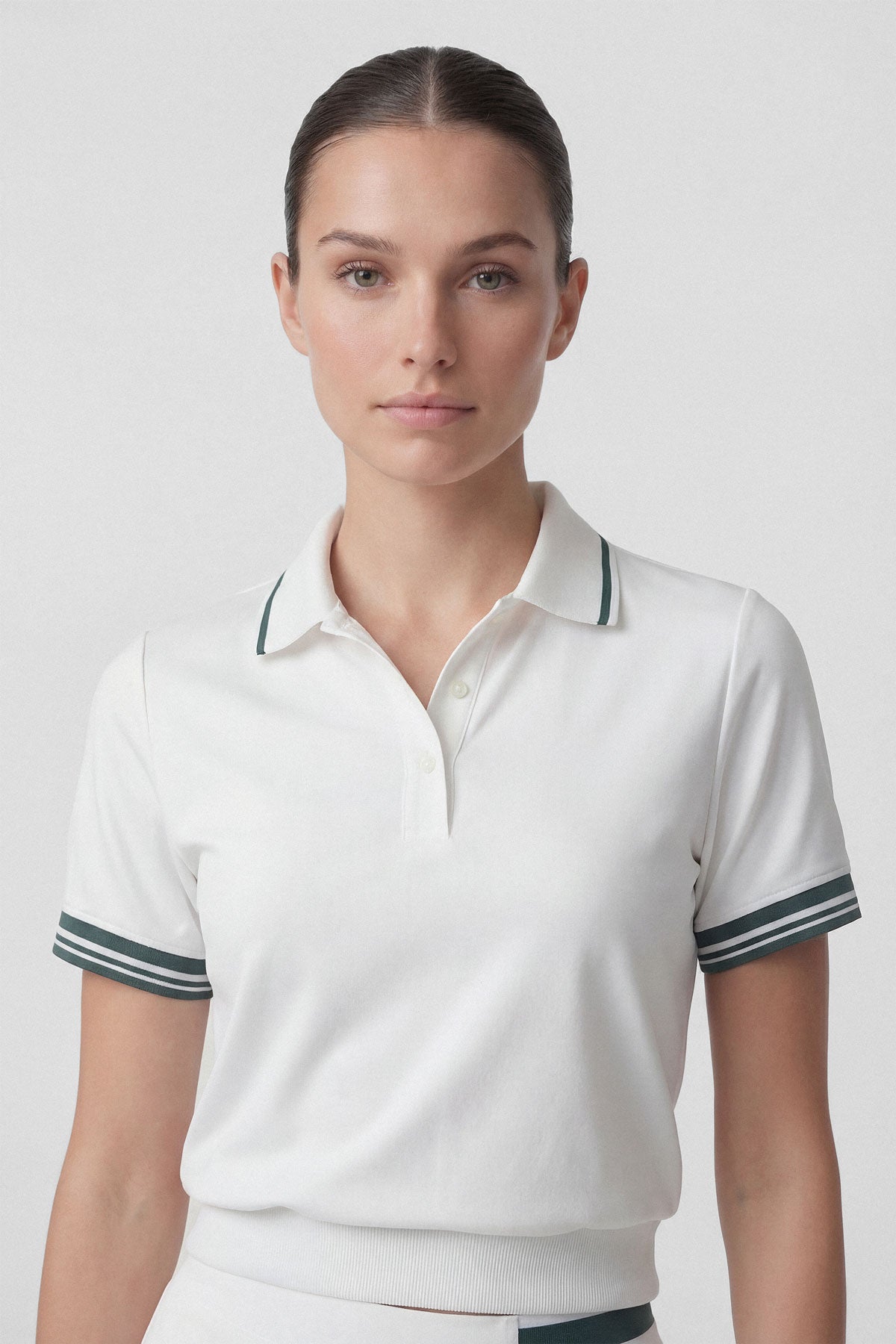
A simple outfit formula can make this easier: start with one streamlined base, add one practical detail and finish with one polished layer. Think of a black skort with a crisp white polo, finished with a lightweight zip layer for an early session. Or a performance dress with a cap and clean socks for a look that needs very little else.
This approach also prevents the common problem of owning several standout pieces with nothing to wear them with. A strong wardrobe has rhythm. The colours relate, the proportions balance and the technical features support the way you move.
Common Player is designed with this kind of modern uniform in mind: elevated pieces that can be styled as a set, then worn separately through the rest of the week.
The essential rotation
You do not need a large collection to be well dressed for court time. A considered edit can cover regular play, wash days and the occasional last-minute invitation. Aim to build around:
- two to three bottoms, such as a skirt, skort or tailored short
- three to four tops with a mix of sleeves, necklines and coverage
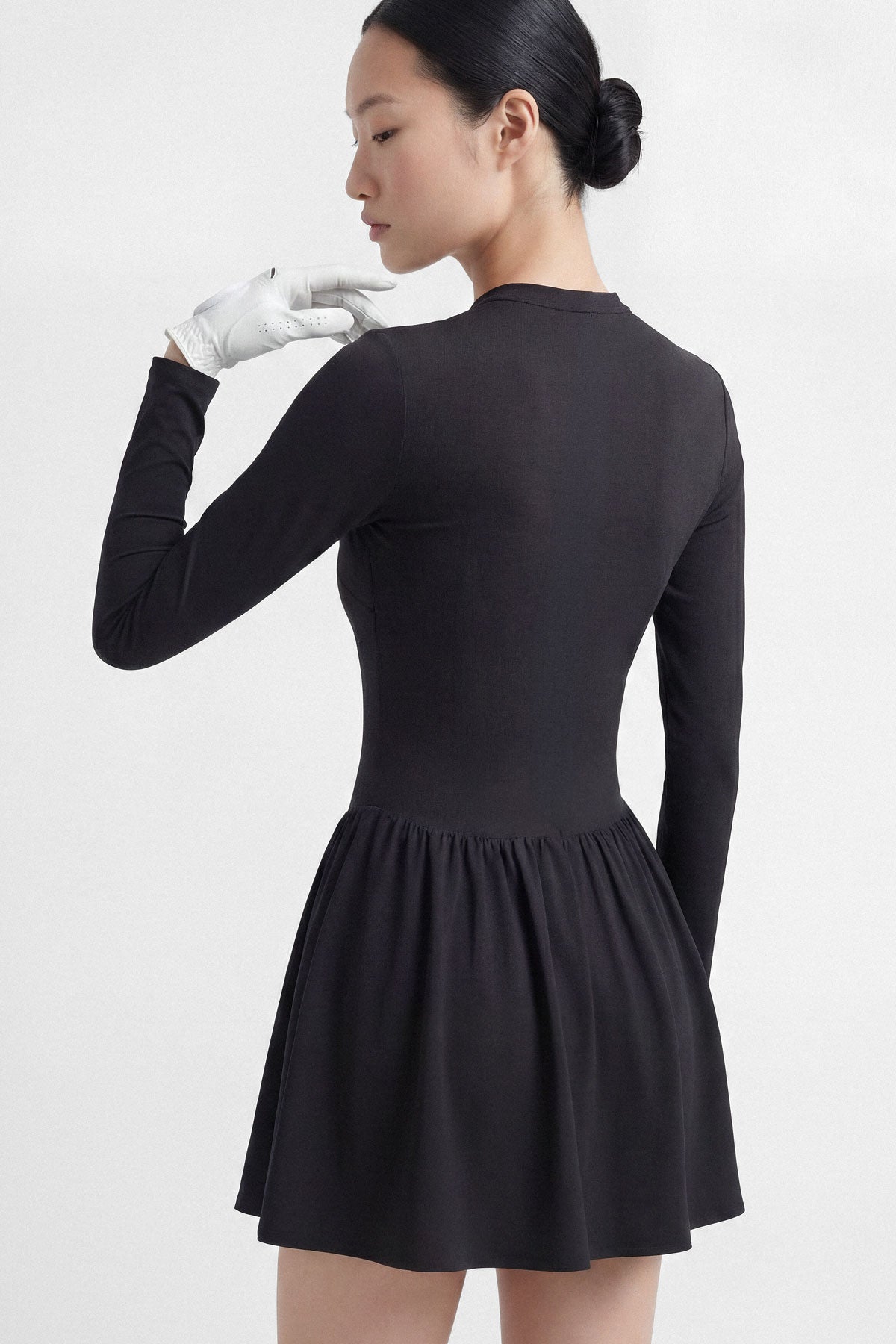
- one or two dresses for an immediate, put-together option
- one polished layer for cool mornings, travel or post-match plans
- a small rotation of socks, caps and accessories that suit your palette
Dress for the conditions, not just the court
Australian sport is often shaped by the weather. A clear morning can become a warm afternoon quickly, and a coastal breeze can change the feel of an evening match. The answer is not bulky layering. It is choosing light, purposeful pieces that can be added or removed without interrupting the outfit.
For warmer sessions, breathable fabrications and clean, minimal silhouettes keep the look composed. For cooler starts, a fitted long-sleeve top or lightweight jacket should sit easily over a dress or polo without bunching at the shoulders. Choose layers that feel intentional on their own, because they may be the piece you keep on for coffee after play.
Sun-ready accessories deserve the same consideration. A cap or visor should complement the outfit rather than feel like an afterthought, while a practical bag needs enough structure for your racquet, water bottle and essentials without overwhelming the look. Small decisions create a more complete uniform.
Make room for life beyond match day
The strongest court wardrobes do not stop working when the session ends. That does not mean every piece must become everyday clothing, but the line between sport and the rest of your day can be much more fluid when the design is refined.
A clean polo can work with relaxed trousers after a lesson. A black performance dress can feel right with an overshirt and sandals for a casual lunch. A fitted layer can be worn over a tank on the walk to the studio or while running a few errands. The key is avoiding pieces that look overly technical when they leave the court.
Keep the styling simple. Fresh socks, a minimal cap, understated jewellery once play is over, and a neat outer layer are often enough. You are not trying to turn sportswear into something it is not. You are choosing pieces with enough shape, finish and restraint to move naturally through your day.
Edit your wardrobe as you go
Building a court wardrobe is a process, not a one-off shop. After a few weeks of play, notice what you repeatedly wash, what stays at the back of the drawer and what you wish you had on hand. That information is more useful than any generic checklist.
Perhaps you need another high-waisted skort because it works across tennis and padel. Perhaps dresses are your fastest route to feeling ready, or perhaps you prefer separate tops and bottoms for flexibility. Refine the rotation based on what genuinely serves your schedule, your sport and your personal style.
The best court wardrobe feels quiet but capable. It gives you one less decision before you leave the house, and it lets you arrive ready for the game - with nothing about your outfit asking for your attention.
Read more
Padel tops vs tennis tops differ in movement, coverage and finish. Find the refined fit, fabric and support details that suit your match day with polish.
Learn how to choose sports crop tops for tennis, padel and golf, with considered advice on support, fabric, fit and court-to-club style for every round.