


The best activewear does more than look considered in the mirror. It stays composed through a serving motion, a low backhand, a long walk between holes and the post-match coffee you did not have time to change for. Learning how to find flattering activewear starts there: with pieces that work with the way you play, rather than asking you to adjust them all day.
Flattering is personal. It is not about disguising your body or following a prescribed silhouette. It is about finding proportion, support and detail that let you feel comfortable, put together and entirely focused on the next point.
Start with the sport, then consider the silhouette
Tennis, padel and golf each ask something slightly different of your wardrobe. A beautiful piece that feels right for a casual hit may not suit a competitive match, while a polished golf outfit needs ease across a full round without looking overly technical.
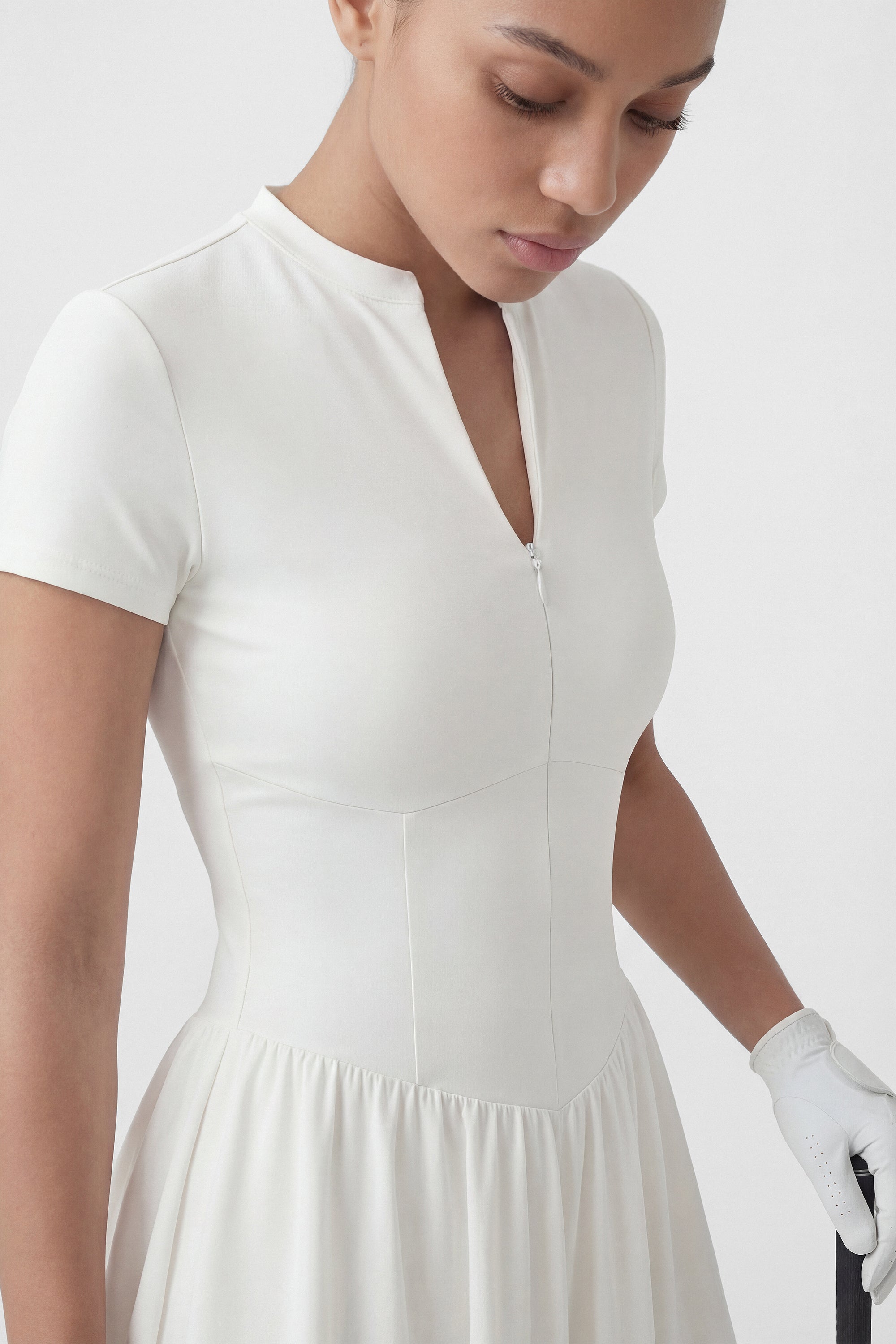
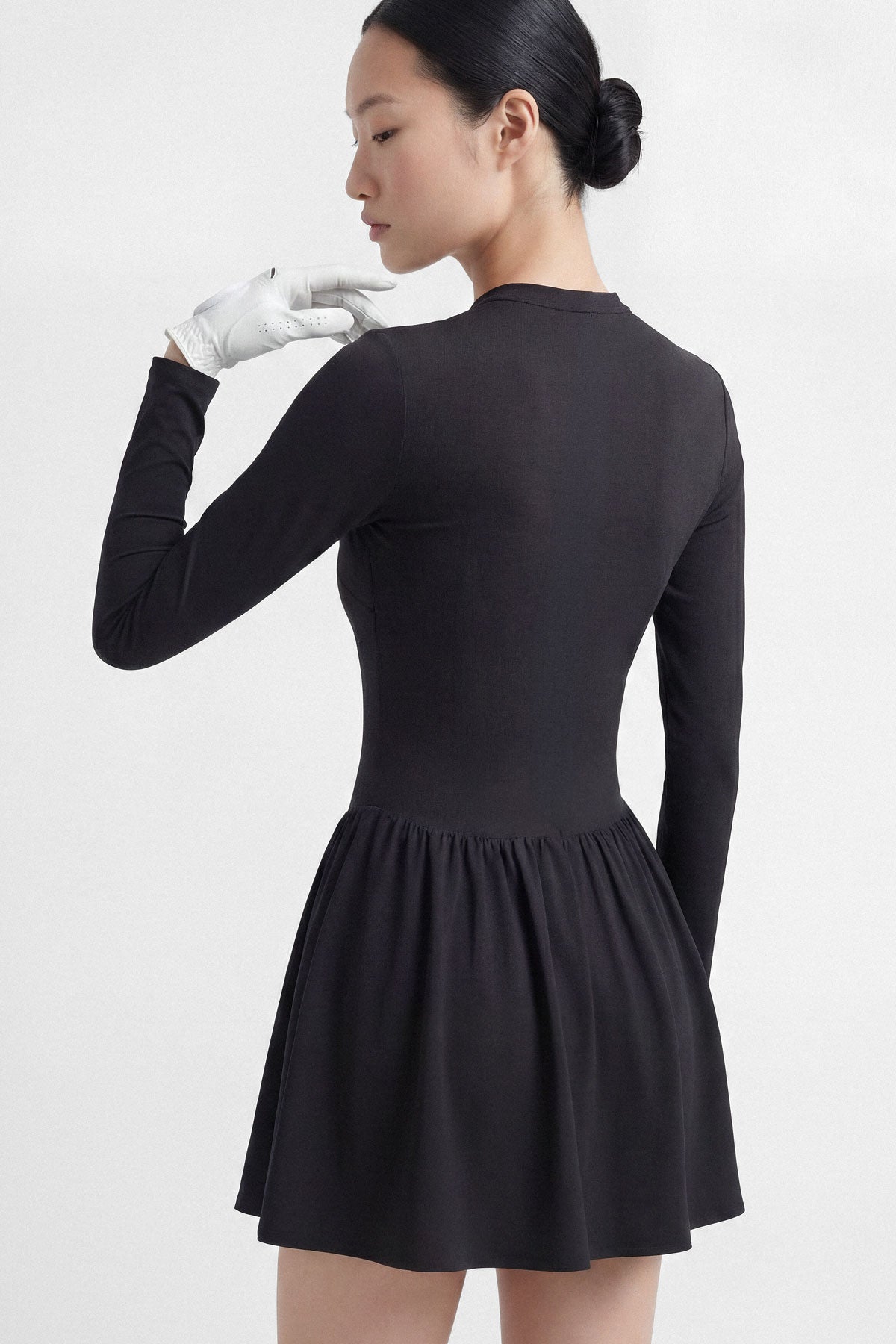
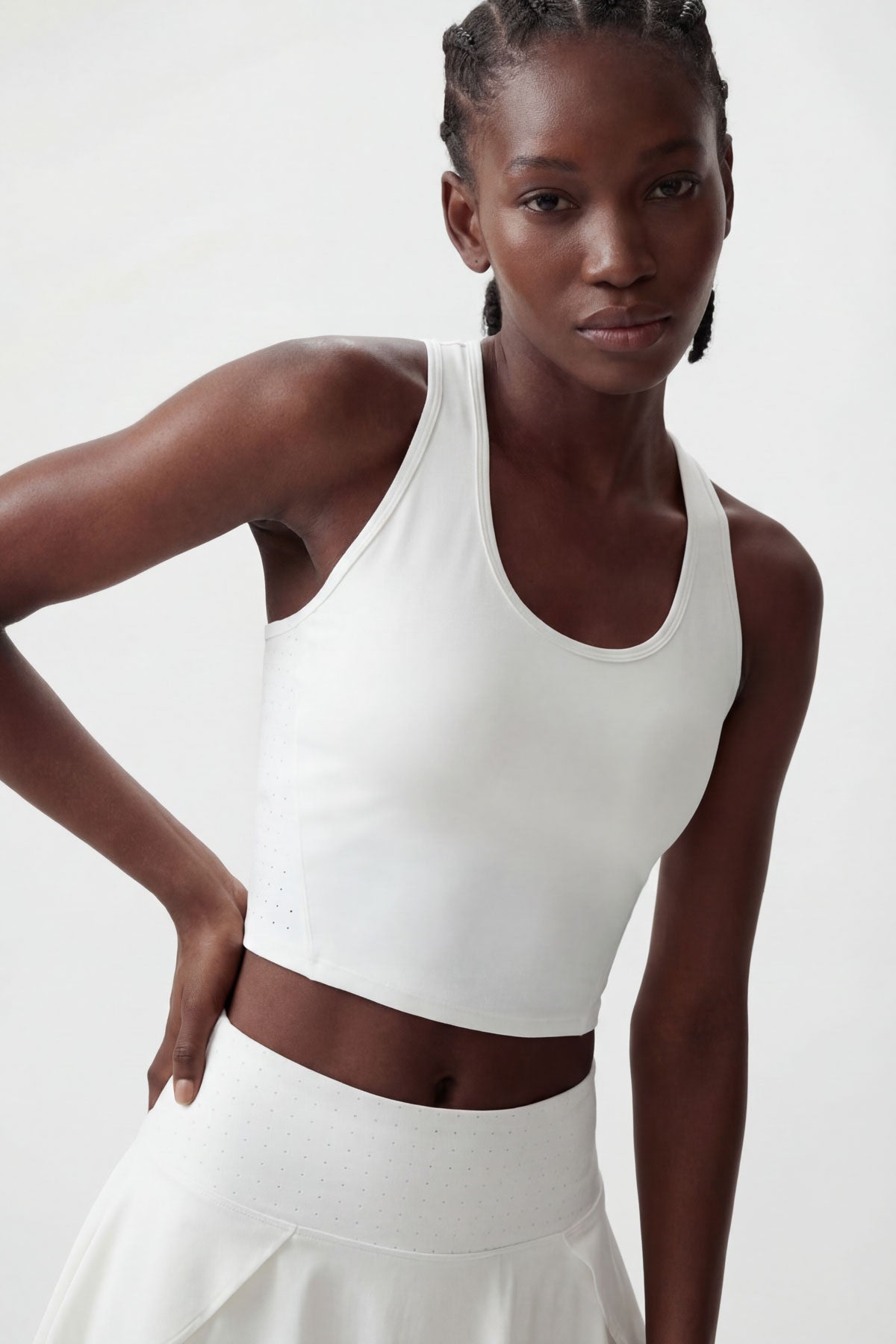
For tennis and padel, look for silhouettes that allow full rotation through the shoulders and torso. A fitted crop top can feel streamlined under a skirt or skort, while a dress offers an effortless one-piece option when you want your outfit resolved before you leave home. The key is that the fit remains stable when you reach, twist and sprint.
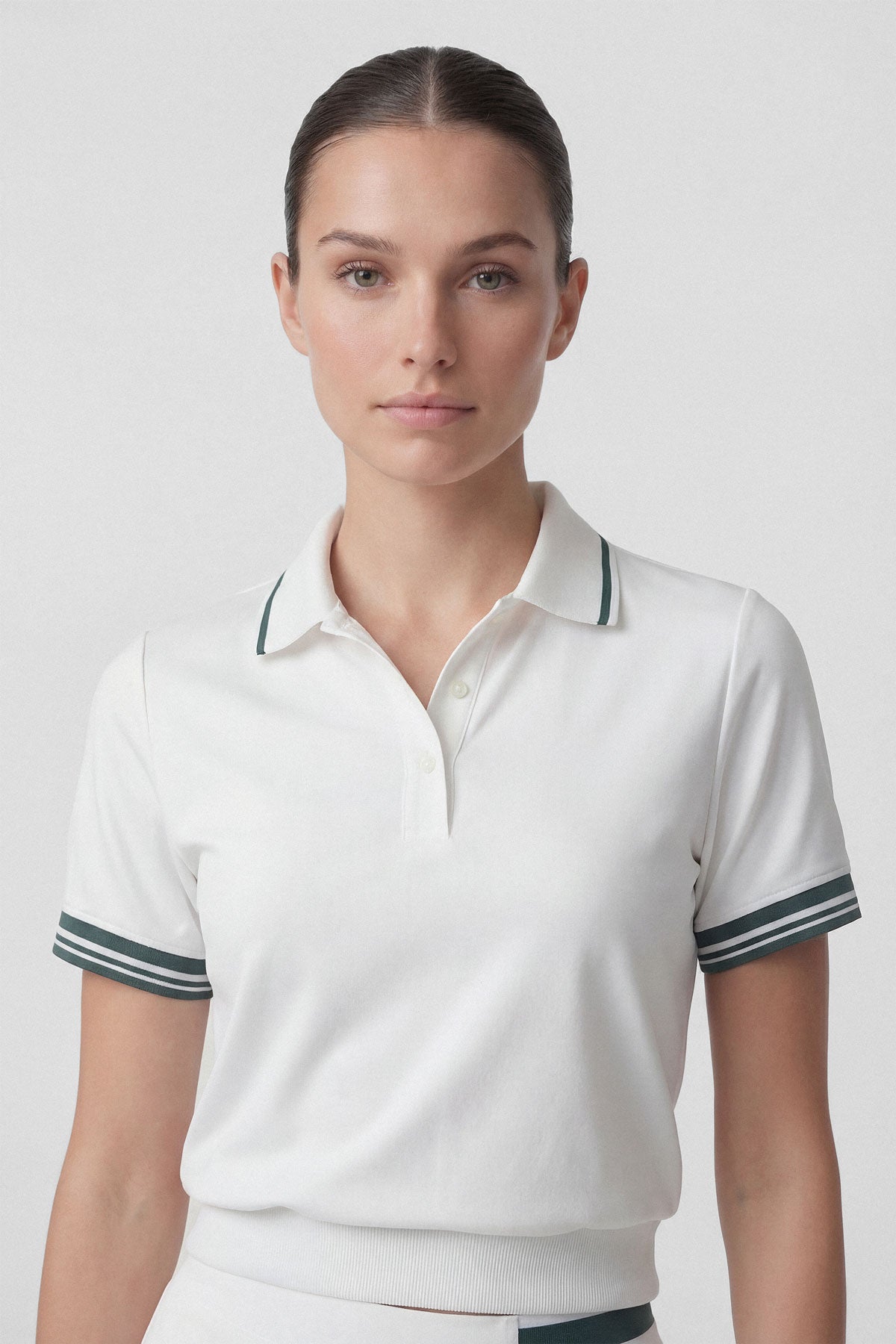
Golf often calls for a little more coverage and a clean collar line. A refined polo paired with a high-waisted skirt or skort creates a classic proportion, without feeling formal or restrictive. Choose a length and shape that feel appropriate for your club while still reflecting your own style.
The most flattering choice is rarely about wearing the smallest or loosest fit. It is about selecting the silhouette that gives you room to move and lets the design sit as intended.
How to find flattering activewear through fit
Fit is where flattering activewear earns its place in your weekly rotation. Start by trying on a piece as you would wear it on court or on course, not standing still with perfect posture. Raise your arms, rotate your shoulders, bend to pick up a ball and take a few strides. Notice whether you are distracted by the waistband, neckline, straps or hem.
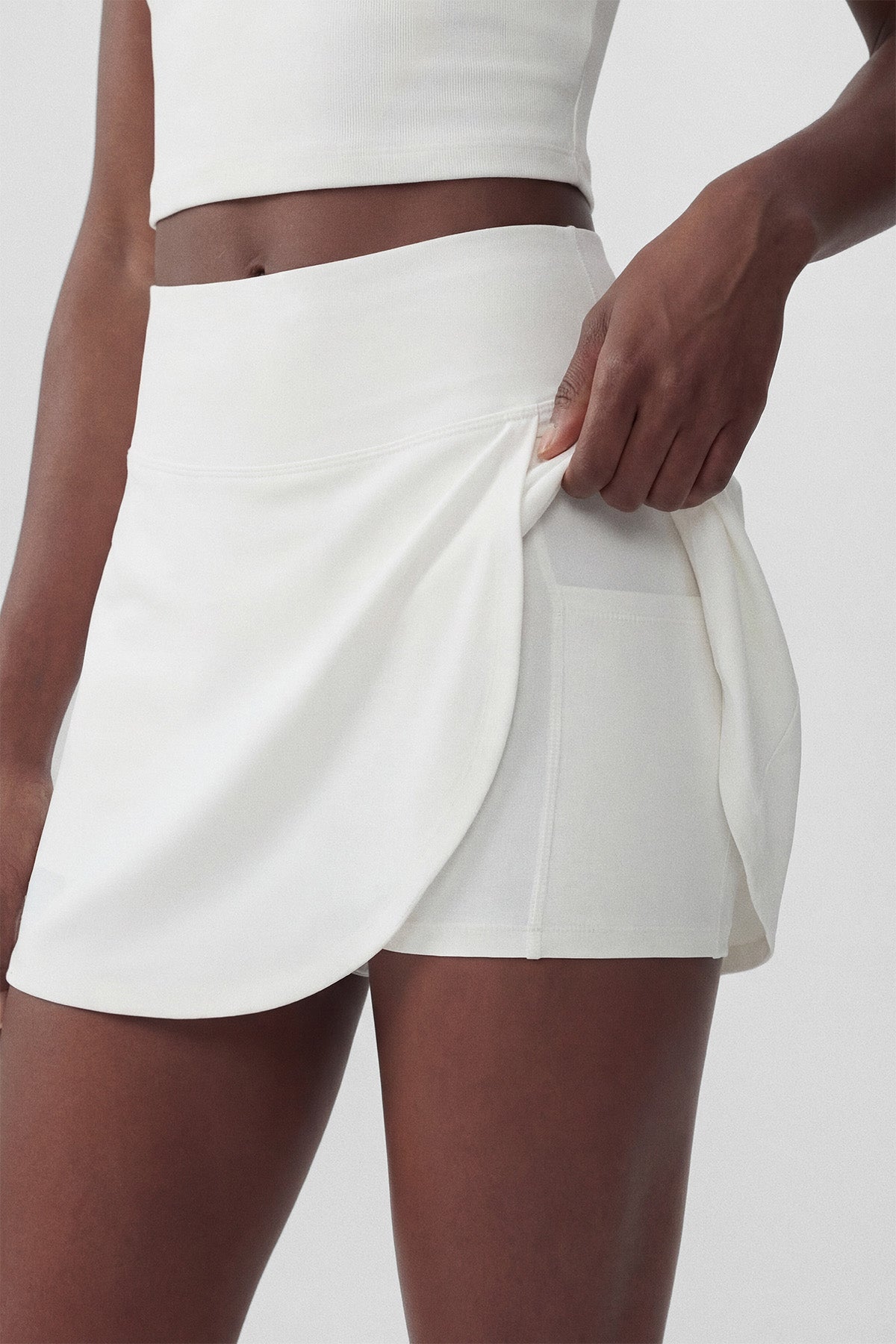
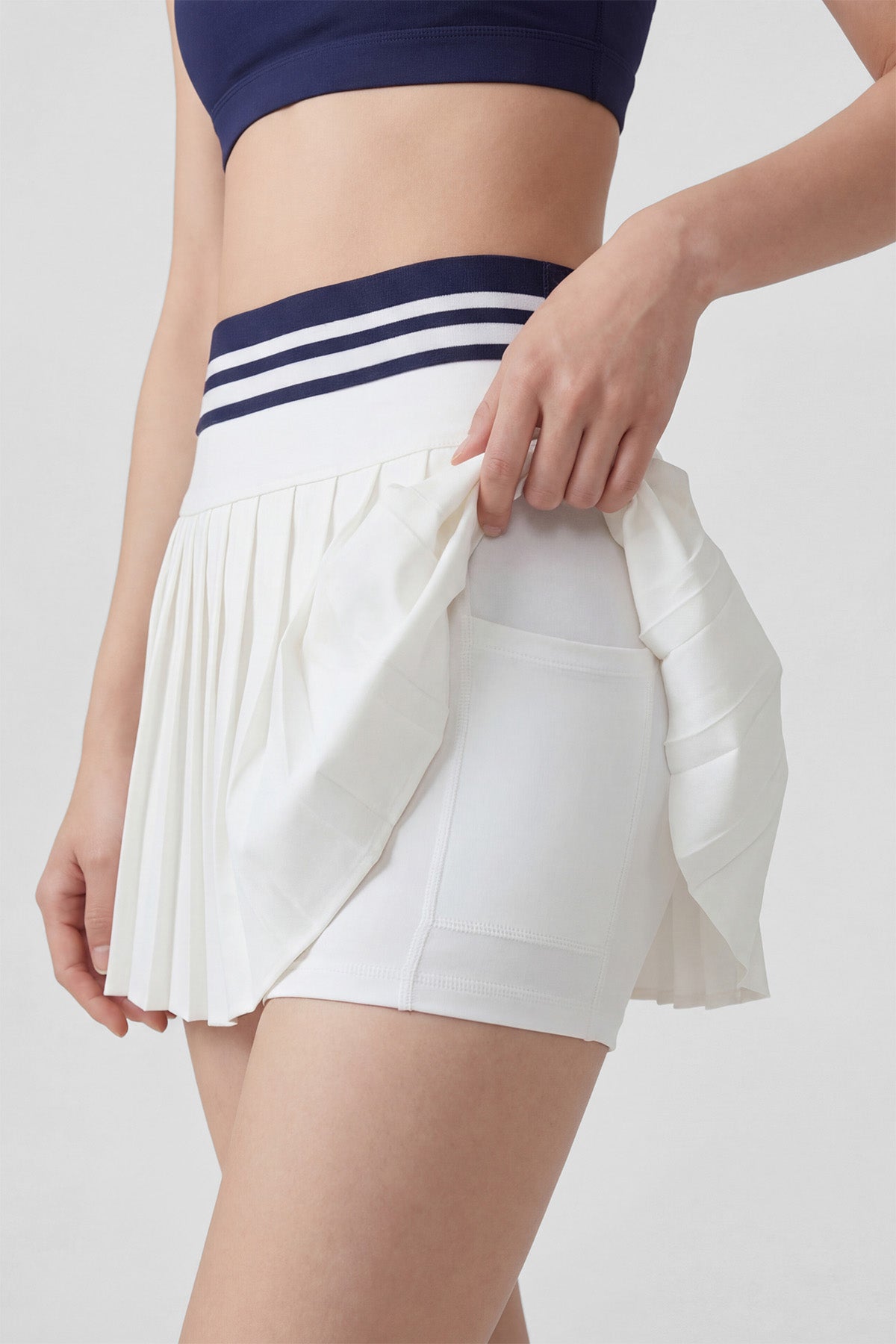
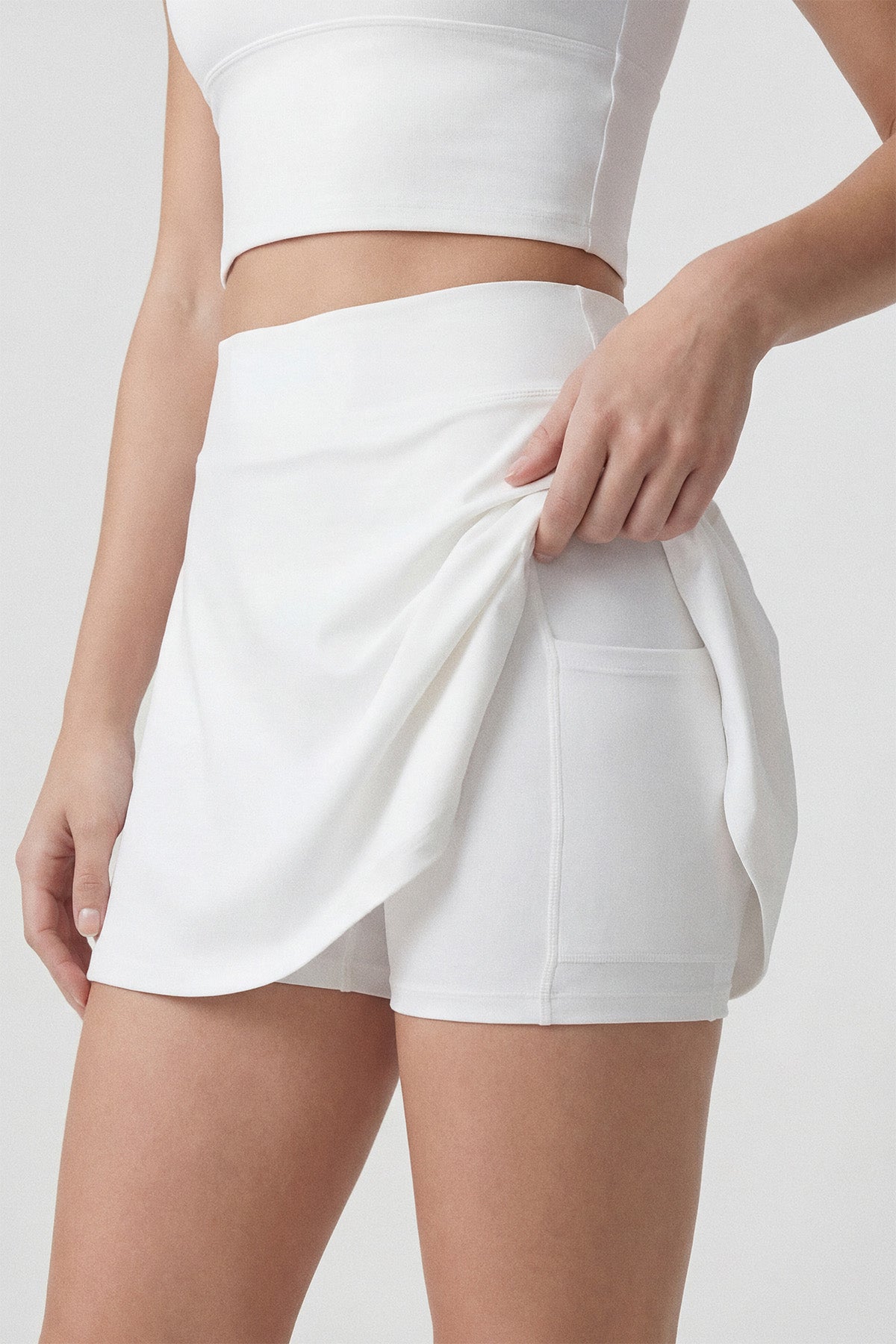
A high-waisted skirt or skort can create a clean, elongated line when the waistband sits flat and secure. It should feel held in place without digging in or rolling down as you move. The same principle applies to built-in shorts: they should offer coverage and confidence without feeling like a second task to manage.
With dresses, pay close attention to the torso. If the waist seam sits too high or too low for your frame, the whole piece can feel slightly off, even when the fabric and colour are right. Adjustable straps are useful here, allowing you to fine-tune the length through the body and the placement of the neckline.
For tops, consider where the hem meets your bottoms. A crop that finishes neatly at the top of a high-waisted skirt can look deliberate and balanced. A longer polo can offer a more traditional profile, particularly with a streamlined skort. Neither is inherently more flattering. The better option is the one that feels proportionate to you and suited to the setting.
Support should feel integrated
Support is not always about maximum compression. For many players, it means a top or dress that stays in place, provides the right level of structure and does not interrupt movement. Removable bra cups can be particularly practical because they let you choose the shape and coverage that feels best for you.
If you find yourself repeatedly adjusting straps or pulling at a neckline in the fitting room, that detail is unlikely to disappear once play begins. A refined look depends on ease. When a garment is well considered, you can forget about it.
Use proportion to build a polished court uniform
A flattering activewear wardrobe is often built from a few dependable proportions rather than endless options. Think of your outfit as a considered balance between fitted and fluid, short and structured, minimal and detailed.
A streamlined top pairs naturally with a skirt that has gentle movement. A more relaxed polo can look especially sharp with a clean, close-fitting skort. If you prefer a dress, choose one with a silhouette that follows your shape without clinging or feeling overly loose. Small design choices, such as a defined waist, a considered collar or a neat contrast trim, can bring clarity to the overall look.
Colour plays a role too. Tonal dressing creates a long, uninterrupted line and feels quietly elevated, while a contrasting top and bottom can define the waist and add a little energy. Neutrals are easy to repeat across a season, but a saturated green, deep navy or fresh white can be just as versatile when the cut is simple.
Rather than asking which colour is most flattering in theory, ask which colours make you feel most like yourself. The answer is usually more useful than any rule.
Choose fabric with a purpose
Fabric affects how a piece looks after thirty minutes of movement, not just how it feels when first worn. For racquet sports, breathable fabrics with stretch help keep the silhouette neat while allowing for quick changes of direction. Micro-perforation details can add airflow without compromising a minimal finish.
A fabric with enough structure tends to hold a skirt, collar or dress shape more cleanly. Too much structure, however, can feel stiff during play. Softer fabrics may feel light and easy, though they may offer less definition. The right balance depends on your preference and how you intend to wear the piece.
For golf, consider how the fabric will feel across a longer day outdoors. A polished polo that maintains its shape and a skort that moves comfortably with each swing can carry you from the first tee through to the clubhouse. For tennis and padel, prioritise fabrics that feel light and stable through faster movement.
Details matter here as much as fabric composition. Side pockets are not simply practical. They change how self-sufficient you feel during a match, keeping a ball close without interrupting the line of a skirt or dress. Built-in shorts offer the same kind of quiet utility: considered, discreet and made for play.
Let your lifestyle shape the final choice
The strongest activewear pieces do not need to be reserved for a single hour on court. If you regularly head from a morning hit to errands, work or lunch, choose styles that look intentional beyond the baseline. A crisp dress, tailored skort or clean polo can make that transition feel natural, especially when the branding and detailing are restrained.
This does not mean every piece needs to do everything. A match-day skirt may be your most functional option for padel, while a sleeveless polo might become your preferred golf staple. Building a small edit around the way you actually play is more useful than chasing a one-outfit solution.
At Common Player, this balance is central to the new court uniform: sport-specific pieces with an elevated, wearable point of view. The aim is not to look dressed up for sport. It is to look like sport is already part of your style.
A simple fitting-room check
Before committing to a new piece, give it a practical test. Check that you can move your arms freely, that the waistband stays where you want it, and that the built-in elements feel comfortable rather than noticeable. Then look at the whole outfit from a little distance. Does it feel balanced? Would you be happy to wear it from the court to your next plan?
Also consider what it pairs with at home. The pieces you reach for most will work with your existing staples, whether that is a favourite white skirt, a navy skort or a neutral visor. A well-chosen top or dress should make getting ready feel simpler, not create a new styling problem.
The right activewear should leave you feeling composed before the first serve and still like yourself once the match is done. Choose the pieces that let you move freely, carry what you need and step onto the court with a quietly confident sense of occasion.