


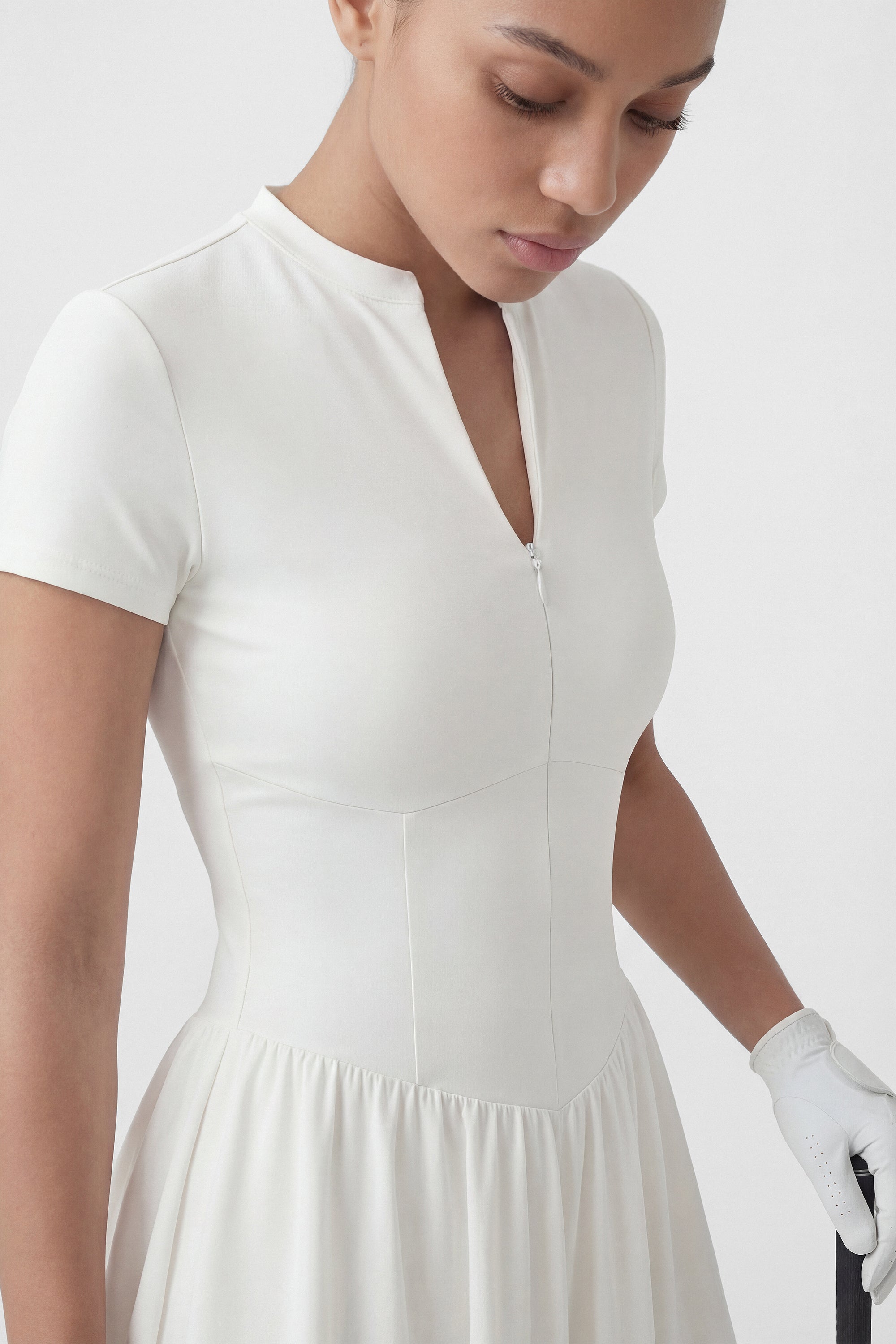
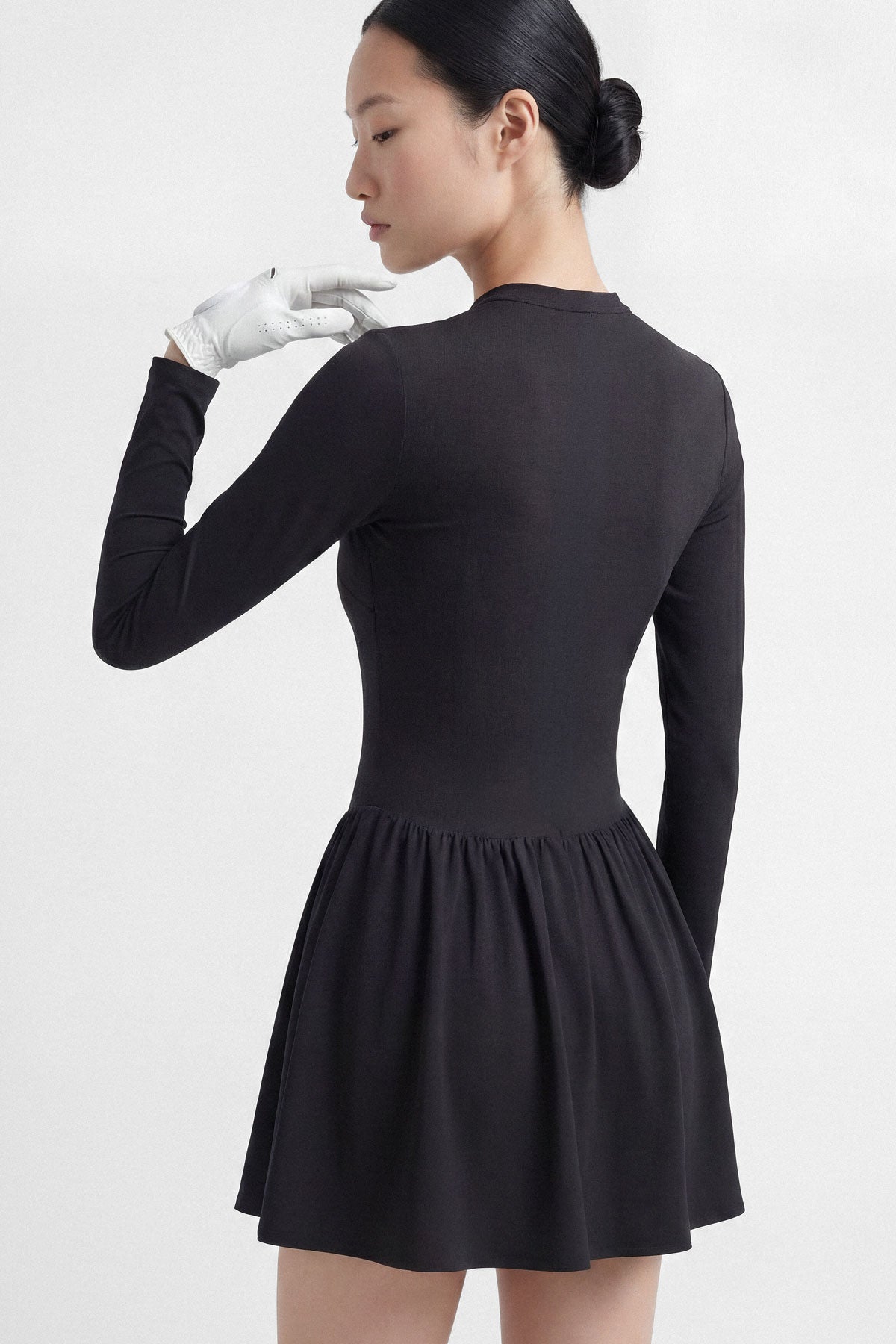
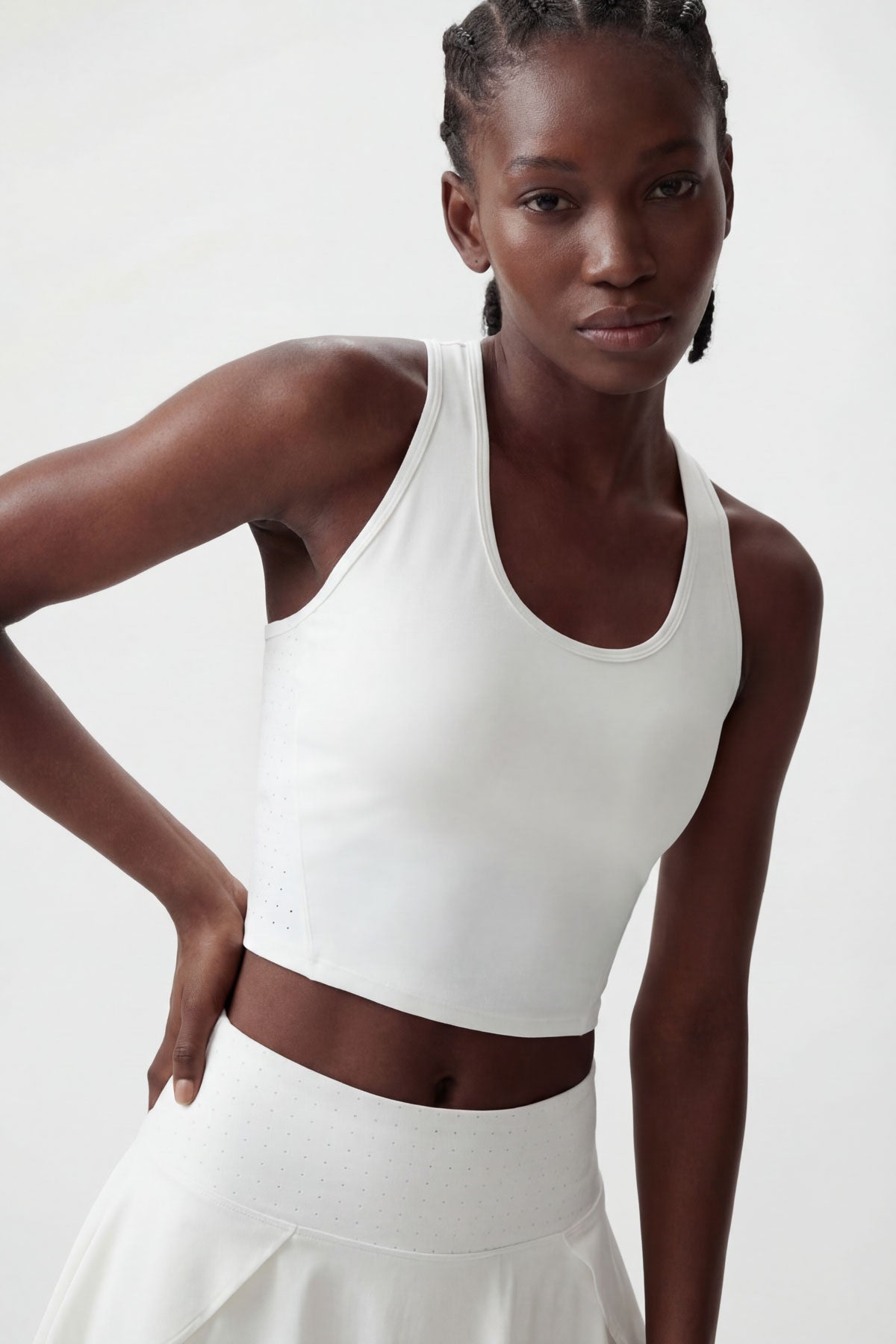
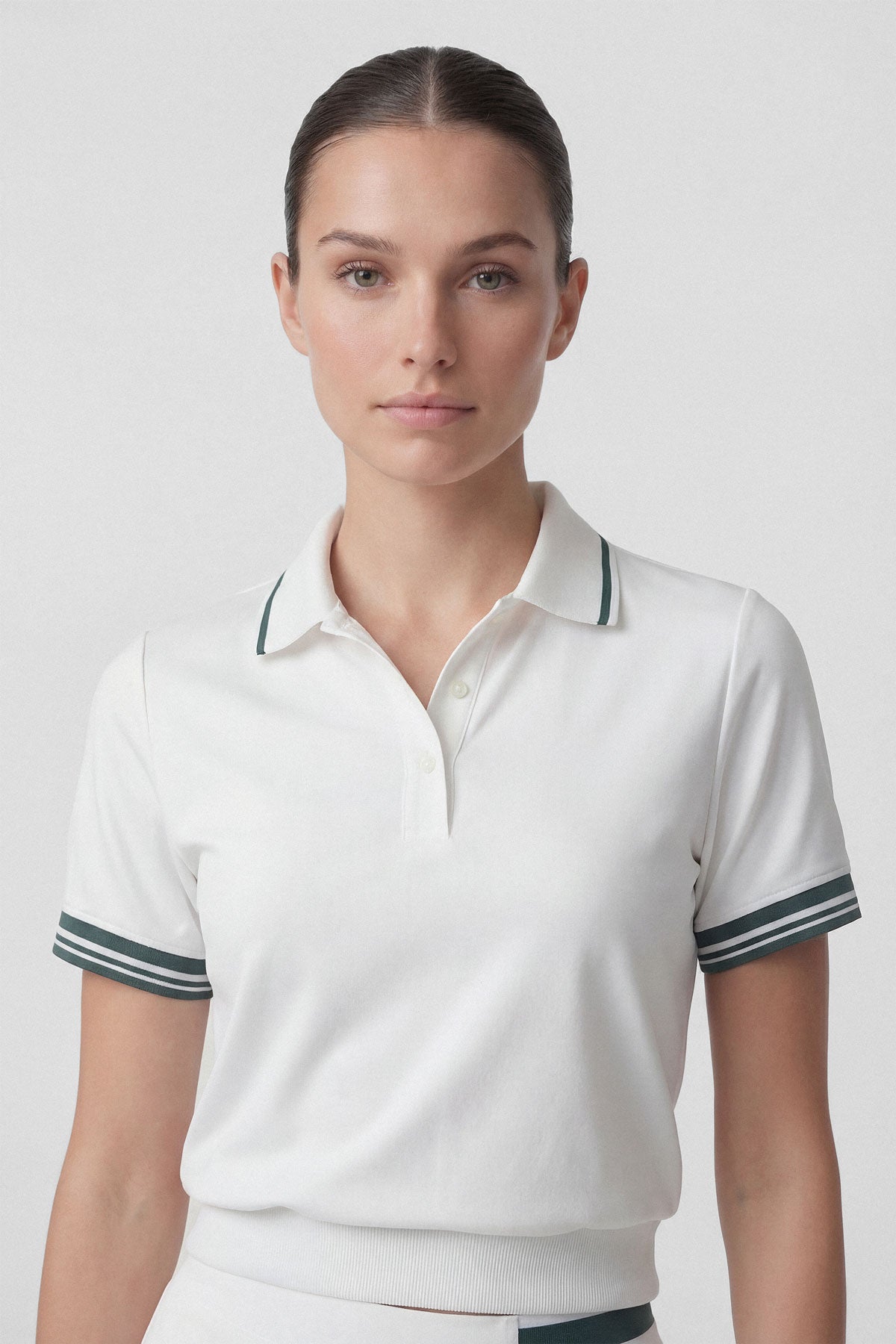
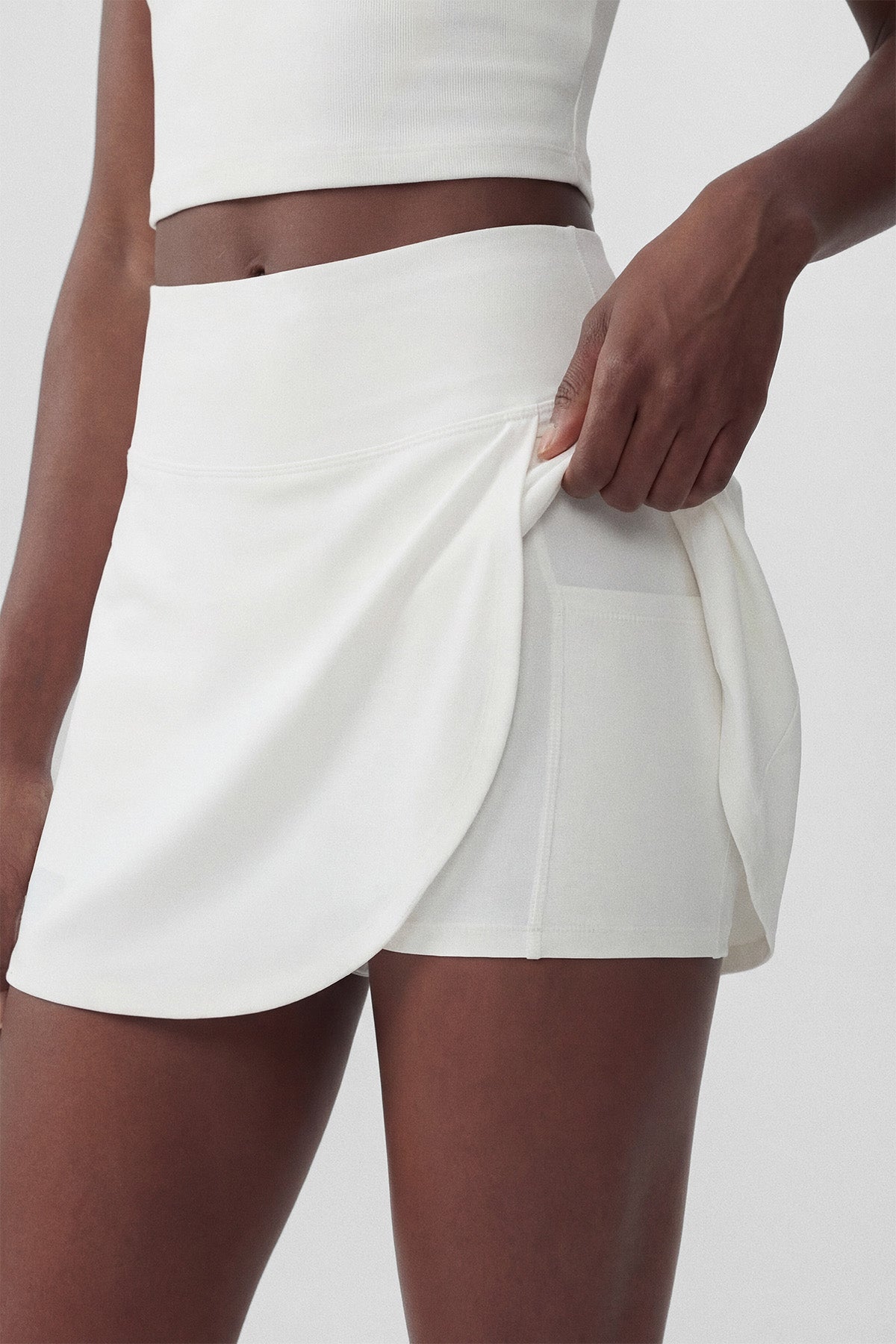
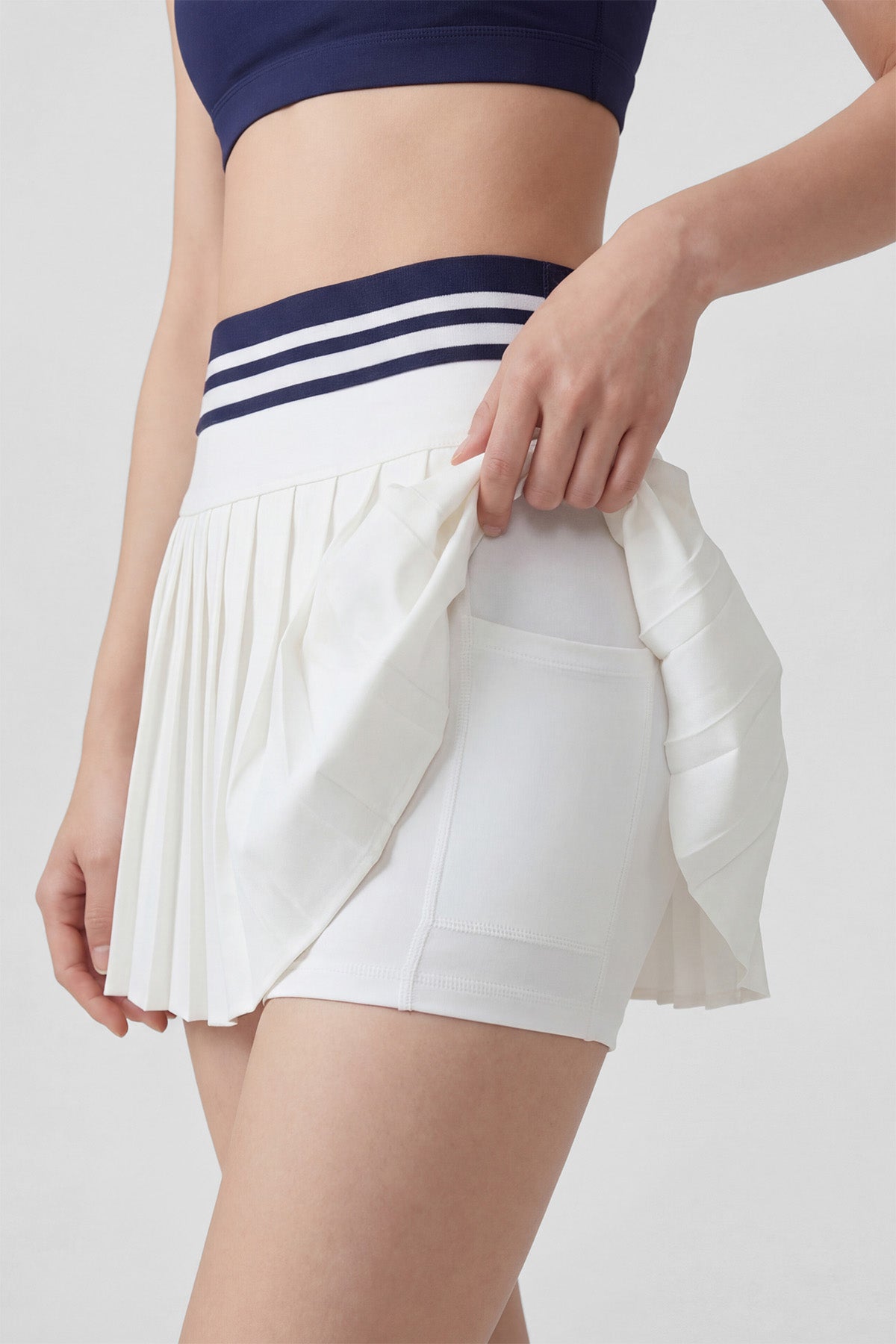
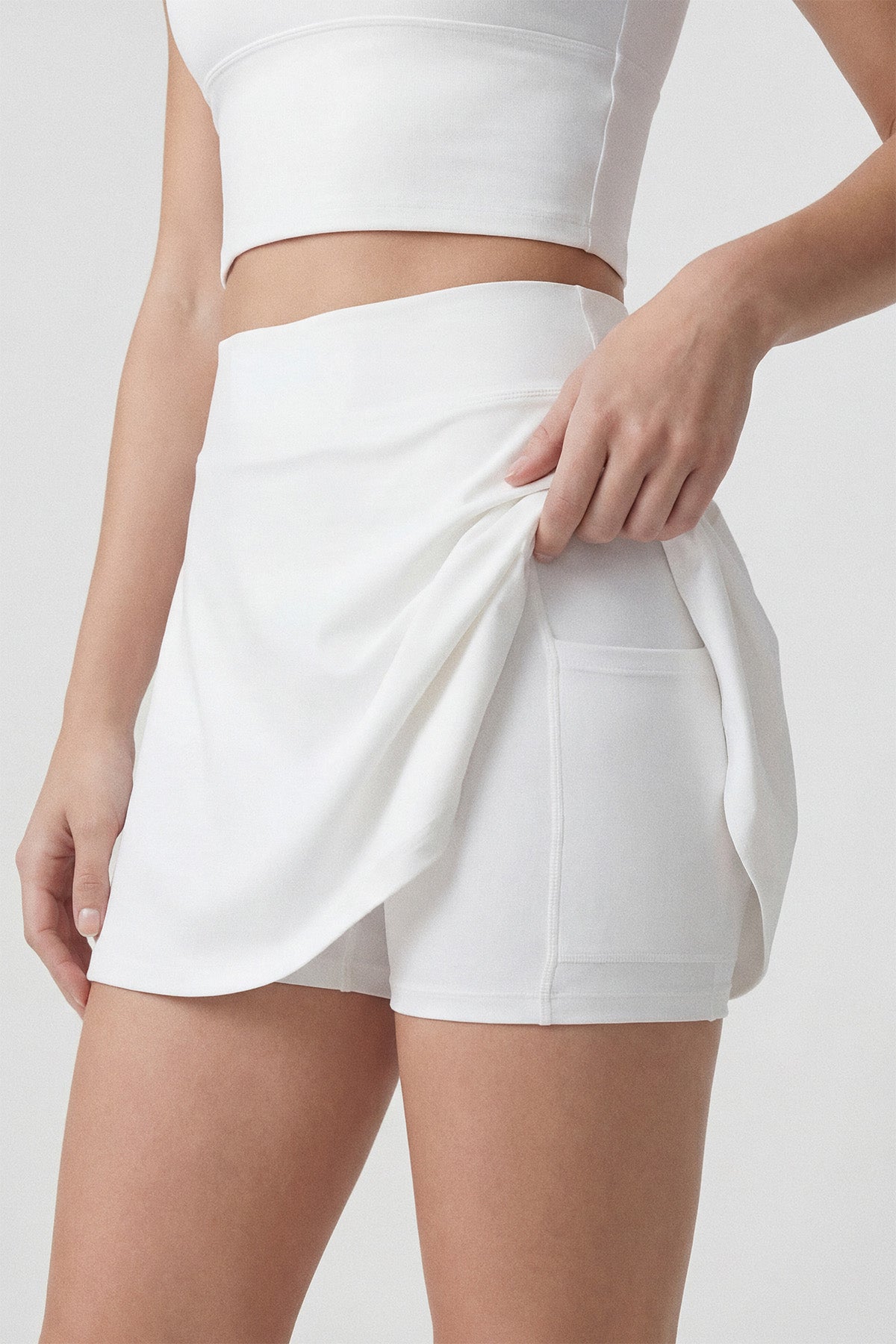
A short that starts inching upwards midway through a set changes more than your outfit. It interrupts your concentration, alters how you move and leaves you adjusting between points when your attention belongs on the ball. Tennis shorts that do not roll up are less about finding one magic fabric and more about choosing a considered combination of fit, construction and movement-led design.
The goal is not compression for its own sake, or a restrictive waistband that holds everything in place. It is a clean, secure fit that stays composed through serves, split steps, deep lunges and the walk from court to coffee. When it works, you barely think about it.
Why tennis shorts roll up in the first place
Rolling up is usually a sign that one part of the short is working against another. The fabric may be too light for the cut, the leg opening may be too loose, or the short may be sitting at the wrong point on the waist. Tennis asks for quick changes of direction and a wide range of movement, so small fit issues become obvious quickly.
A very short inseam can also be part of the equation. There is nothing inherently wrong with a shorter silhouette, particularly beneath a skirt or dress, but less length means less fabric anchoring the short along the upper thigh. If the hem is loose or the material has little recovery, it can travel upwards with every stride.
Size matters, though not in the simplistic sense of sizing up or down. Shorts that are too small often stretch across the hip and thigh, creating tension that encourages the fabric to shift. Shorts that are too large can bunch and move independently of the body. The right fit should feel close without feeling overworked.
What to look for in tennis shorts that do not roll up
The most polished court shorts tend to rely on quiet details rather than obvious hardware. Start with the relationship between the waistband, fabric and leg length. Each element should support the others.
A waistband that stays put without digging in
A high-waisted fit can offer a particularly secure starting point, provided the waistband is wide enough to distribute tension rather than concentrating it in one narrow strip. Look for a waistband that sits flat against the body and returns to shape after movement. It should not fold over when you bend to collect a low ball or twist into a forehand.
The best test is not standing in the change room. Move. Take a few wide steps, squat gently, reach overhead and rotate through your torso. If the waistband shifts before you have started playing, it is unlikely to feel better three games into a set.
There is a trade-off here. A firmer waistband can feel more secure, while a softer waistband can feel more relaxed for social play or long days moving between the court and the rest of your plans. Neither is automatically better. The right choice depends on how you like your shorts to feel and what sits over them.
An inseam with enough presence
For stand-alone tennis shorts, a slightly longer inseam often offers more stability than an ultra-short cut. It does not need to be long or bulky. It simply needs enough length to maintain its line as you move.
This is especially useful for players who spend plenty of time in low, lateral positions. Padel players may notice it during repeated lunges at the net, while tennis players may value it when tracking a wide ball from the baseline. A smooth hem that sits flat is generally more dependable than a tight, overly elasticated band that grips at one point and creates pressure elsewhere.
When shorts are built into a dress or skort, the same principle applies, but the outer layer changes the experience. The internal short should feel secure on its own, while the skirt or dress falls cleanly over it. If the inner layer is constantly shifting, the silhouette above it will rarely stay as refined as it should.
Fabric with stretch and recovery
Soft stretch is only half the story. A fabric also needs recovery, meaning it returns to its original shape after you lunge, sit, serve and move through a match. Fabric that stays stretched out can lose its clean line over the course of a session, creating bunching at the inner thigh and a less secure feeling overall.
Look for a smooth, opaque fabric with a balanced weight. Very thin materials can feel light at first but may be more inclined to twist or ride up. On the other hand, a fabric that is too heavy can feel restrictive in warm Australian conditions. The sweet spot is breathable material with enough structure to hold its shape, without making the short feel stiff.
Micro-perforated details can be a considered addition in areas where you want more airflow, as long as they are positioned without compromising the short's support or finish. The aim is functional ease with a polished appearance, not technical detailing for its own sake.
Construction that follows movement
Flat, thoughtfully placed seams can make a noticeable difference. A seam sitting directly where the thigh repeatedly bends or rubs can contribute to the fabric gathering and travelling upwards. Well-designed shorts use clean panel lines and avoid unnecessary bulk, allowing the garment to move with you rather than fight for position.
A gusseted construction, or simply enough room through the centre seam, is also worth considering. Tennis movement is multidirectional. A short cut only for walking or gym training may look good at first glance but reveal its limitations during a wide split step.
Pockets deserve attention too. A side pocket should sit flat when empty and remain stable when carrying a ball, rather than pulling the short out of shape. This is one of those details that separates a court-ready piece from an everyday active short. Practicality should not disrupt the line of the garment.
Fit checks before match day
A pair of shorts can feel perfect during a quick try-on and still need a more thorough test at home. Wear them for ten minutes rather than ten seconds. Move through the positions you actually use on court, preferably with the underwear, top or skirt you intend to pair them with.
Check whether the hem stays where you expect after walking, stepping sideways and sitting down. Notice whether the fabric gathers at the inner thigh, whether the waistband rolls when you bend, and whether the shorts feel different once a ball is in the pocket. These are practical cues, not minor details.
It is also worth considering the role of underwear. A bulky seam or a second tight waistband underneath can create friction and encourage the layers to shift. Many players prefer a streamlined base layer or built-in short for this reason. What matters is that the combination feels smooth and secure, not layered for the sake of it.
If you are choosing between two sizes, resist the temptation to select the tighter option purely for the promise of security. A close fit should still allow natural movement through the hip and thigh. The better choice is the one that lies flat, moves easily and does not demand attention.
Styling a secure short without losing the refined look
Function does not need to mean an overly sporty finish. A clean high-waisted short can create a sharp, balanced silhouette with a fitted polo, a cropped top or a relaxed performance shirt tucked slightly at the front. Monochrome dressing keeps the look focused, while a considered contrast in trim or texture adds interest without becoming loud.
For players who prefer more coverage, shorts under a skirt, skort or court dress offer the same confidence with a softer outer silhouette. The key is proportion. The internal short should be invisible in feel and discreet in appearance, while the outer layer moves cleanly around it.
This is where a modern court wardrobe earns its place. Pieces should be able to handle a competitive set, then look intentional at the clubhouse or on the way home. Common Player approaches this balance through streamlined silhouettes and practical details designed for the rhythm of play.
Care can affect how your shorts stay in place
Even a beautifully cut short relies on fabric recovery over time. Follow the care label, avoid excessive heat where possible and skip fabric softeners if the garment instructions recommend it. These small habits help preserve the stretch and shape that keep shorts feeling secure.
Pay attention when a familiar pair begins to move differently. If the waistband has softened, the fabric has lost its return or the hem no longer sits flat, it may be time to rotate it out of match-day duty. A well-chosen replacement should restore that quiet confidence: no tugging, no adjusting, just room to focus on the next point.
Read more
Performance dresses for women unite refined style, considered support and freedom to move across tennis, padel, golf and the rest of your day, as well.
Golf attire for women should move with your swing, meet club expectations and carry you from the first tee to the rest of your day in style with ease.