


Best Fabric for Tennis Clothing on Court
A clean winner can turn quickly when the sun is high, the rallies are long and your outfit has started working against you. The best fabric for tennis clothing is not simply the lightest or softest option. It is the one that stays comfortable through serves, sprints and seated post-match plans, while holding a polished shape from first point to last.
For modern players, fabric is part of the uniform. It determines how a dress falls, whether a skort stays neat through movement, how a crop top feels under pressure and whether a piece still looks considered once you leave the court. The right choice balances breathability, stretch, coverage and recovery, with enough refinement to feel like your style rather than standard issue sportswear.
What tennis clothing fabric needs to do
Tennis is not a straight-line sport. You reach overhead, rotate through your torso, change direction sharply and spend plenty of time bending, lunging and resetting. A fabric needs to move with all of that without becoming loose, sheer or restrictive.
Breathability matters, particularly across Australian summers and open hard courts. So does moisture management: technical fibres can move moisture away from the skin and dry more quickly than traditional cotton, helping the garment feel less heavy as a match progresses. But performance is only one part of the decision. A fine, opaque knit with a smooth finish also gives dresses, skirts and fitted tops the elevated look that makes them easy to wear beyond the baseline.
The best choices usually come as blends rather than single fibres. Blending allows designers to combine the softness or structure of one fibre with the stretch and shape retention of another. The percentage, weight and knit construction all matter, which is why two garments labelled with similar materials can wear very differently.
The best fabrics for tennis clothing
Polyester with elastane: the dependable match-day blend
Polyester-elastane is one of the most common foundations for tennis apparel, and for good reason. Polyester is light, durable and quick-drying, while elastane provides the stretch that lets a fitted silhouette move naturally. In a dress, skort or close-fitting polo, this blend can offer a smooth finish and reliable recovery after repeated movement.
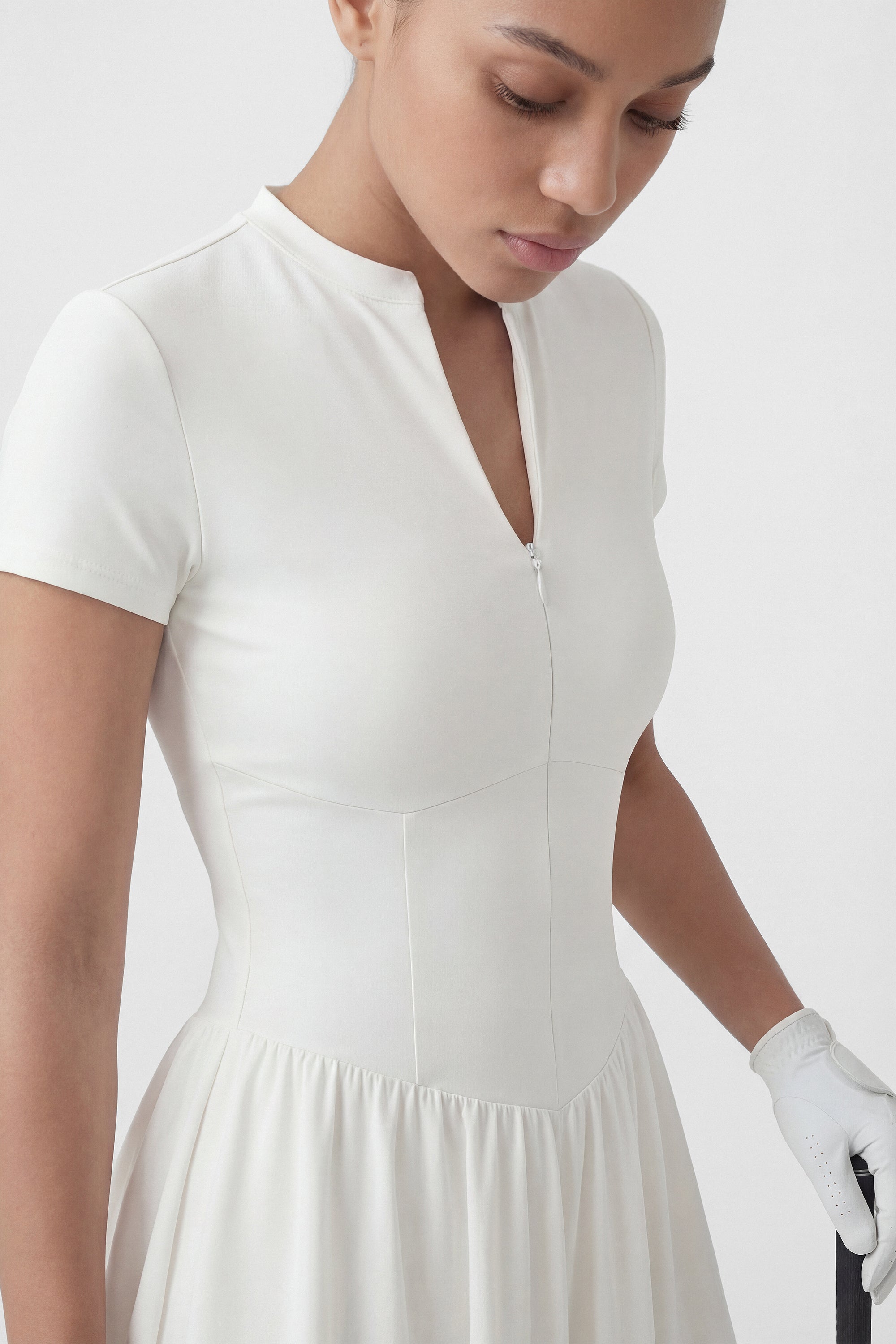
It works especially well for pieces designed to feel streamlined: high-waisted skirts, built-in shorts and fitted tanks all benefit from fabric that returns to shape rather than bagging at the knees, waist or straps. Look for a fabric with enough density to feel secure, rather than a thin, overly shiny finish. A more matte surface generally reads as more refined and is easier to style away from the court.
The trade-off is feel. Some polyester-heavy fabrics can feel less natural against the skin than other performance blends, particularly in humid conditions. A well-designed knit, breathable panelling or micro-perforation can make a meaningful difference.
Polyamide with elastane: a softer, more polished option
Polyamide, often called nylon, is a strong choice when you want a luxe hand feel alongside technical stretch. Blended with elastane, it tends to create a soft, sleek fabric with a flattering, lightly compressive feel. It is particularly suited to modern tennis dresses, sculpted crop tops and elevated leggings or shorts where the silhouette is as important as the function.
This fabric often has a more premium finish than a basic polyester blend. It can sit smoothly against the body, resist a rougher texture and create clean lines without looking overly athletic. For players who prefer a minimal court wardrobe with considered details, polyamide-elastane offers an excellent balance of movement and polish.
Not every polyamide fabric is ideal for very hot conditions, however. A dense fabric may feel warmer than a lighter polyester knit. For summer play, choose pieces with breathable construction, open-back details or subtle perforation where airflow is most welcome.
Micro-perforated performance knits: made for warm courts
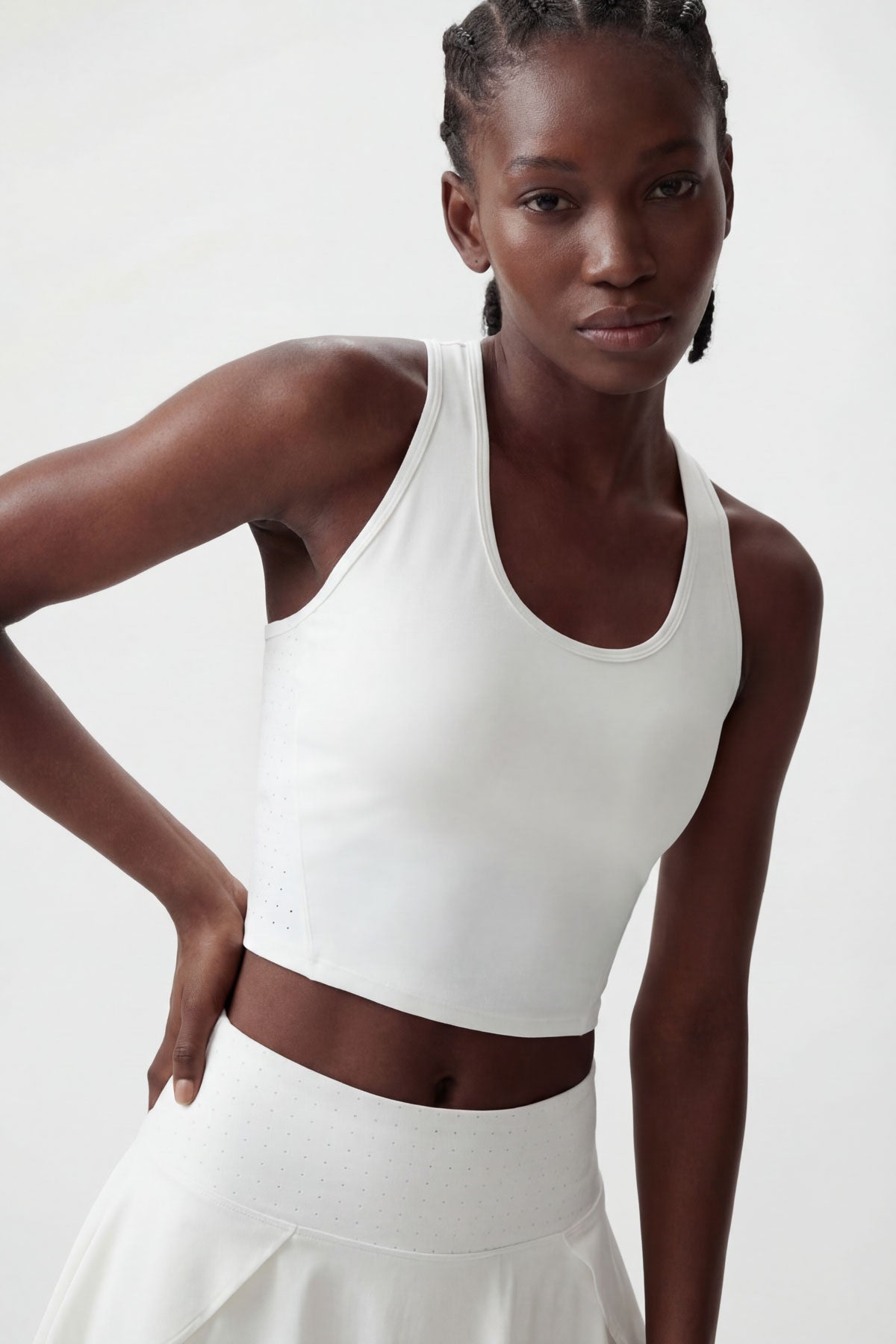
Micro-perforated fabric is less about one fibre and more about construction. Tiny, deliberate openings in a technical knit improve airflow while maintaining a clean, modern finish. It is a thoughtful detail for the upper back, side panels or areas where warmth builds during play.
The best versions feel integrated into the design rather than purely functional. A perforated panel can add texture and definition to an otherwise minimalist dress or polo, giving the piece a sharper, more sport-specific edge. It is particularly useful for day sessions, padel courts with limited airflow and long social matches that roll into the afternoon.
The key is placement and opacity. Perforation should support ventilation without compromising coverage. A quality garment uses it strategically, not everywhere.
Cotton blends: best for lighter sessions and off-court wear
Cotton has an undeniable appeal. It is soft, familiar and gives a relaxed, classic look that works beautifully for oversized tees, warm-up layers and post-match styling. Yet pure cotton absorbs moisture and can take longer to dry, so it is rarely the strongest choice for a fitted piece worn through a demanding match.
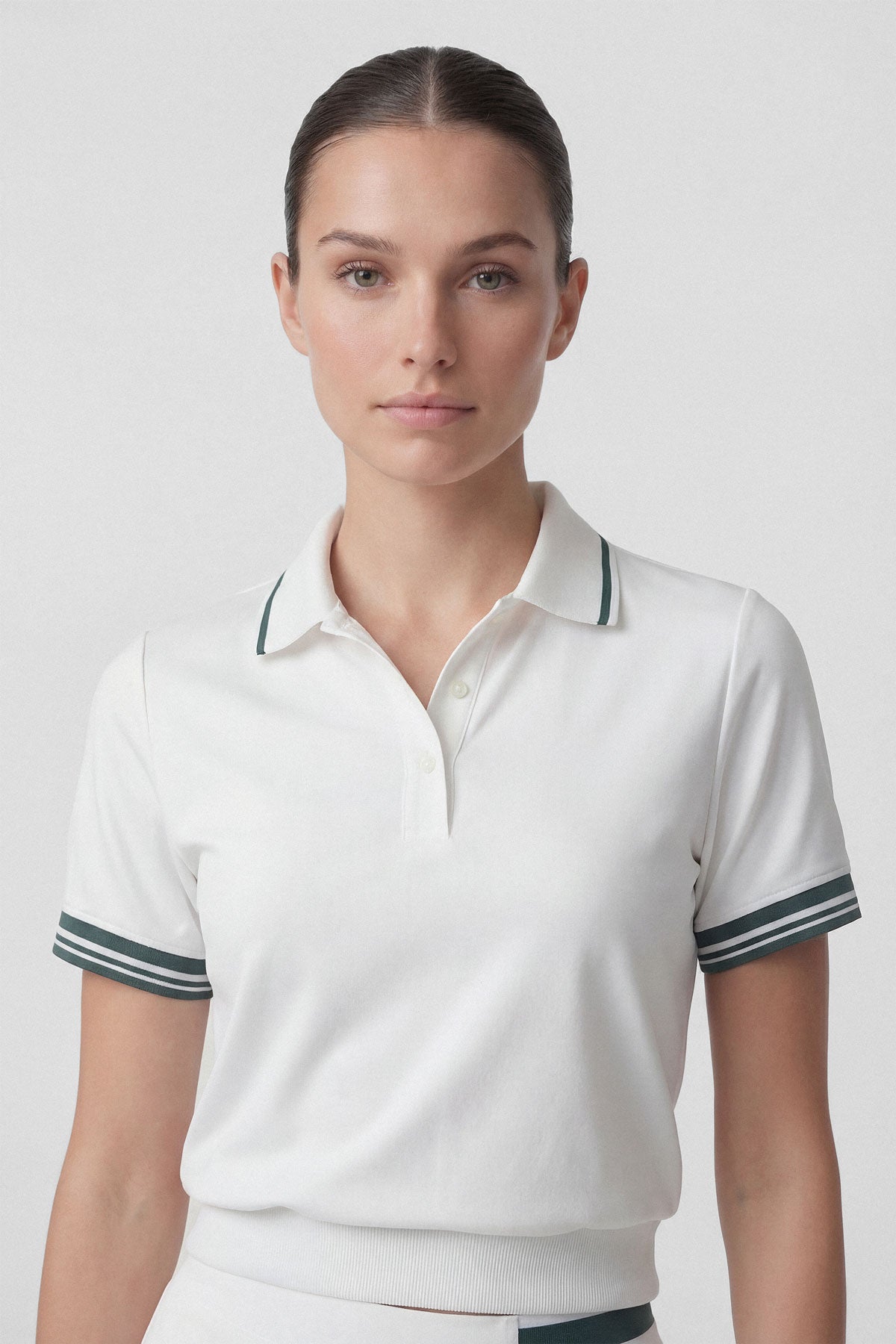
A cotton-performance blend can be a better compromise. With technical fibres added for stretch and quicker drying, it keeps some of cotton's natural softness while becoming more practical for movement. Think easy polos, relaxed tanks or lightweight layers for the club, rather than a high-intensity match dress.
If you love the look of cotton, keep it in your tennis wardrobe. Just reserve it for the moments when softness and casual structure matter more than technical performance.
Fabric weight changes the feel of a piece
The fibre content on a label is useful, but it does not tell the whole story. Fabric weight affects drape, support and coverage. A very light fabric can feel airy and easy in heat, but it may offer less structure in a skirt or fitted dress. A heavier fabric can create a more sculpted silhouette and confident opacity, although it may not be the first choice for a peak-summer singles match.
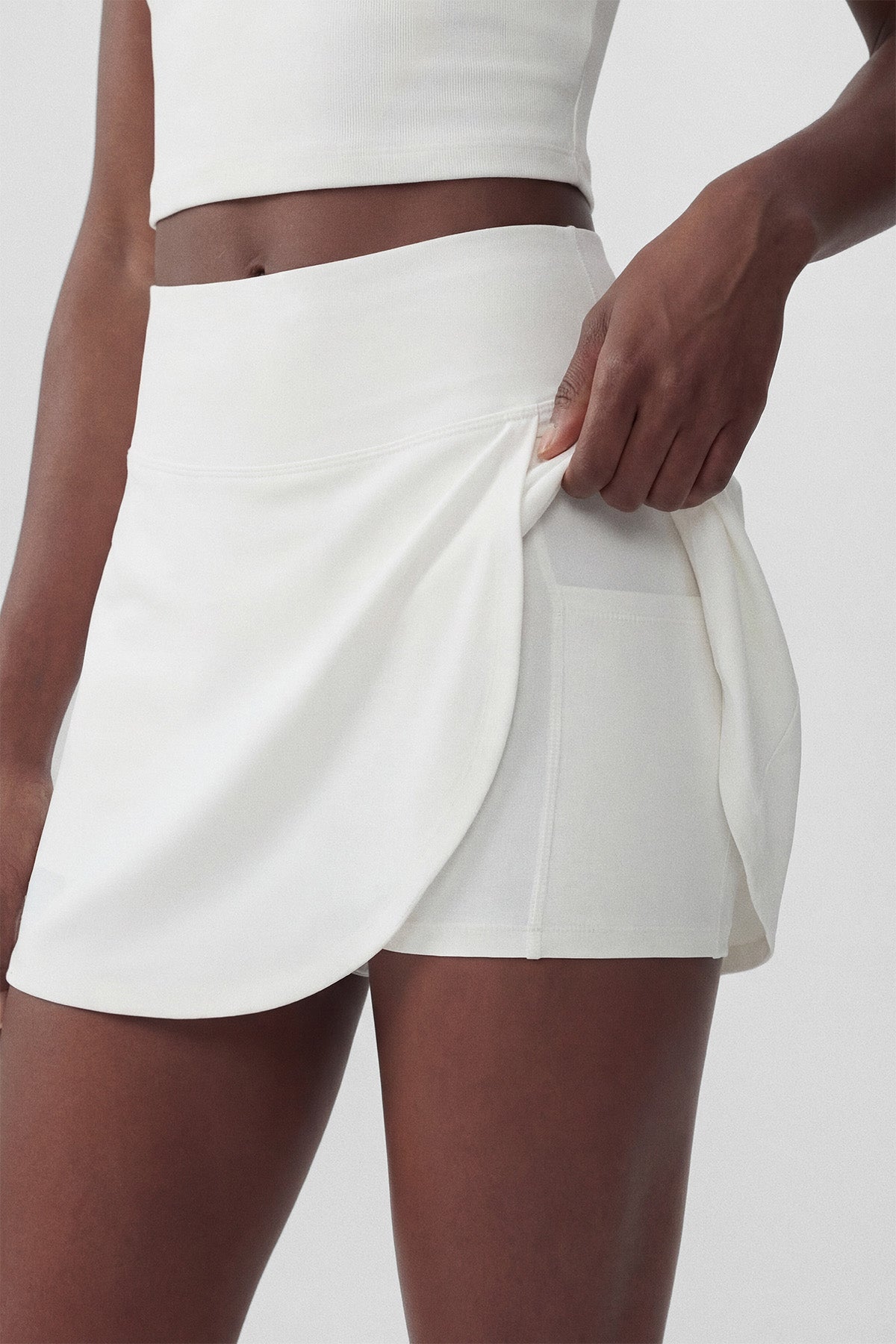
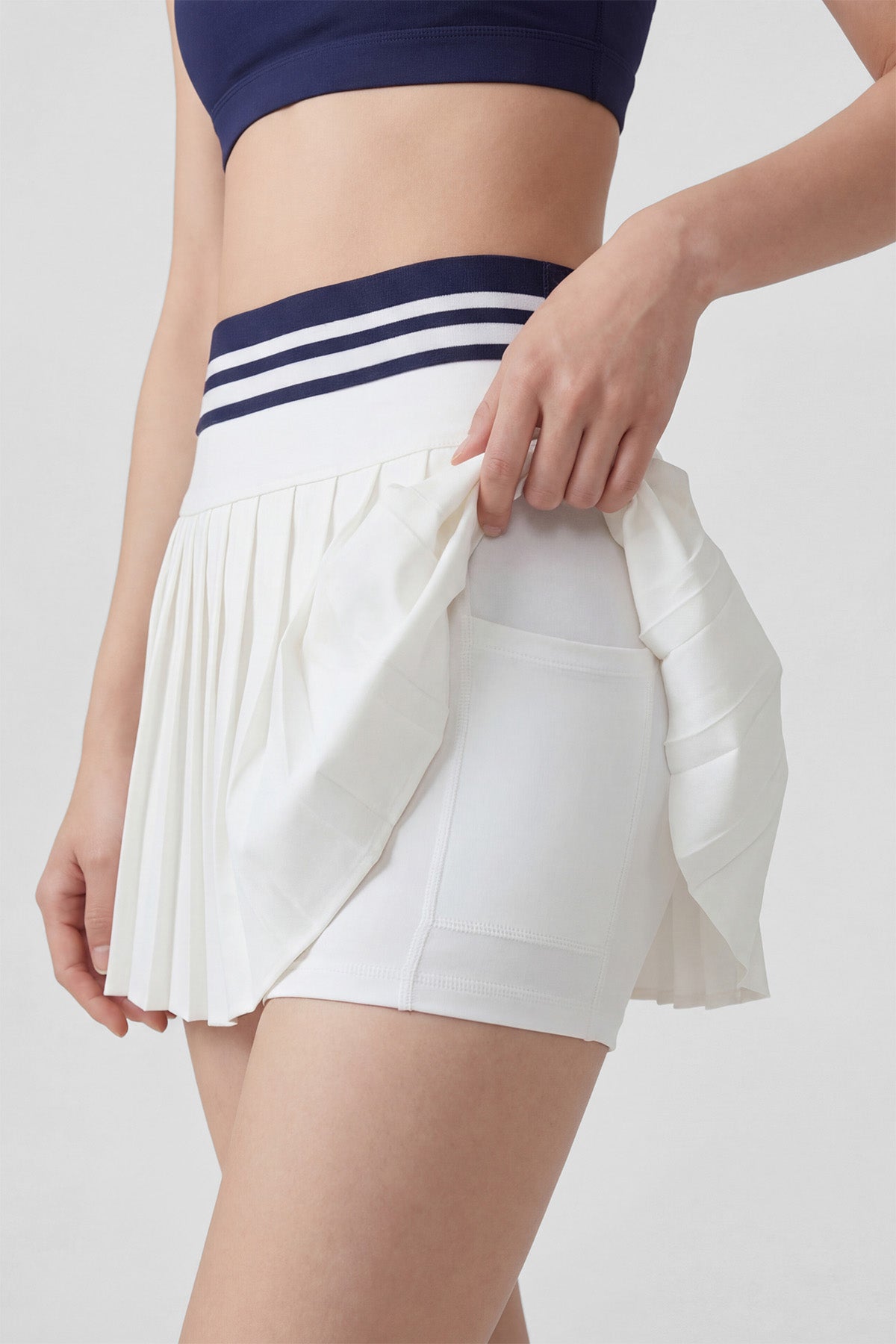
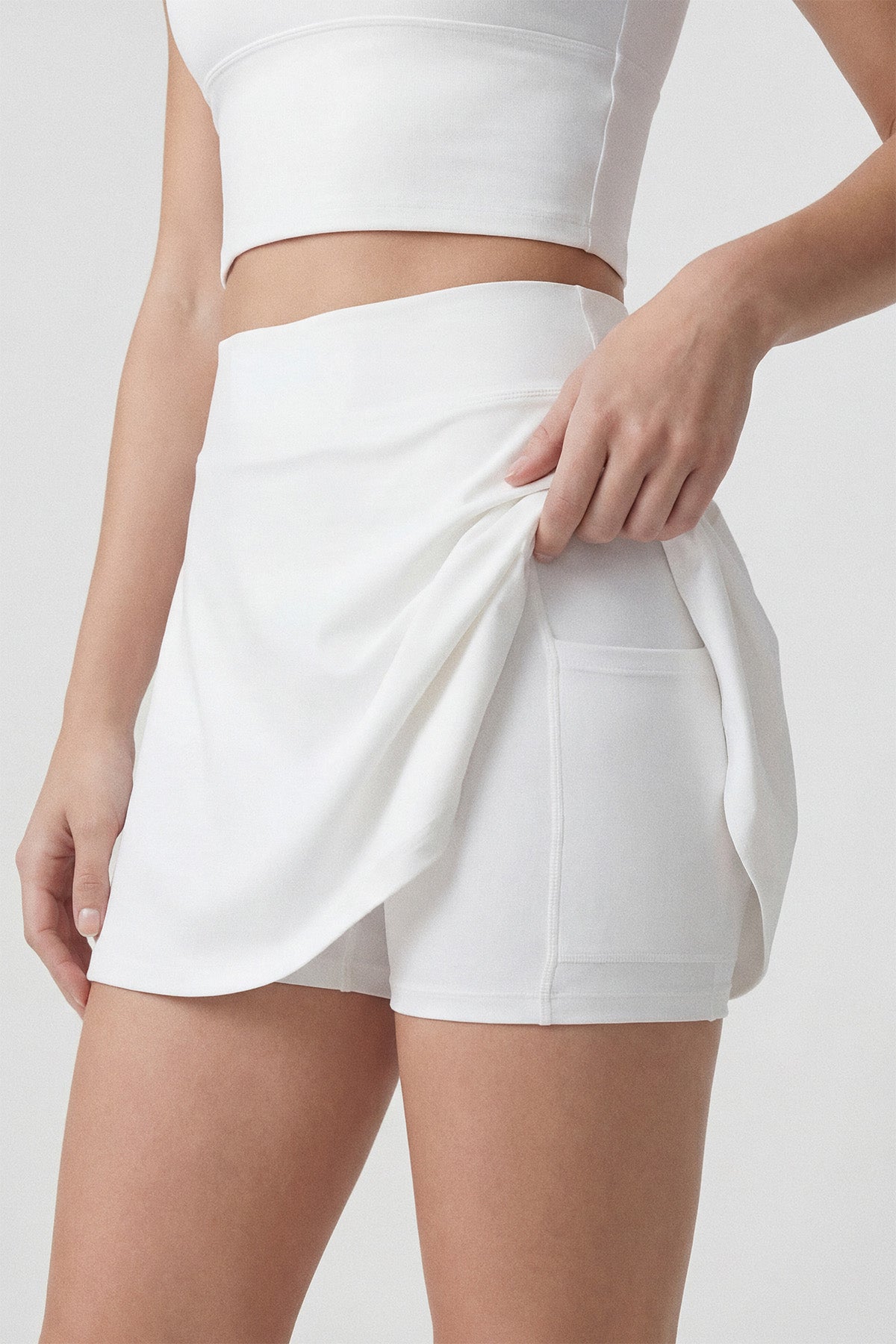
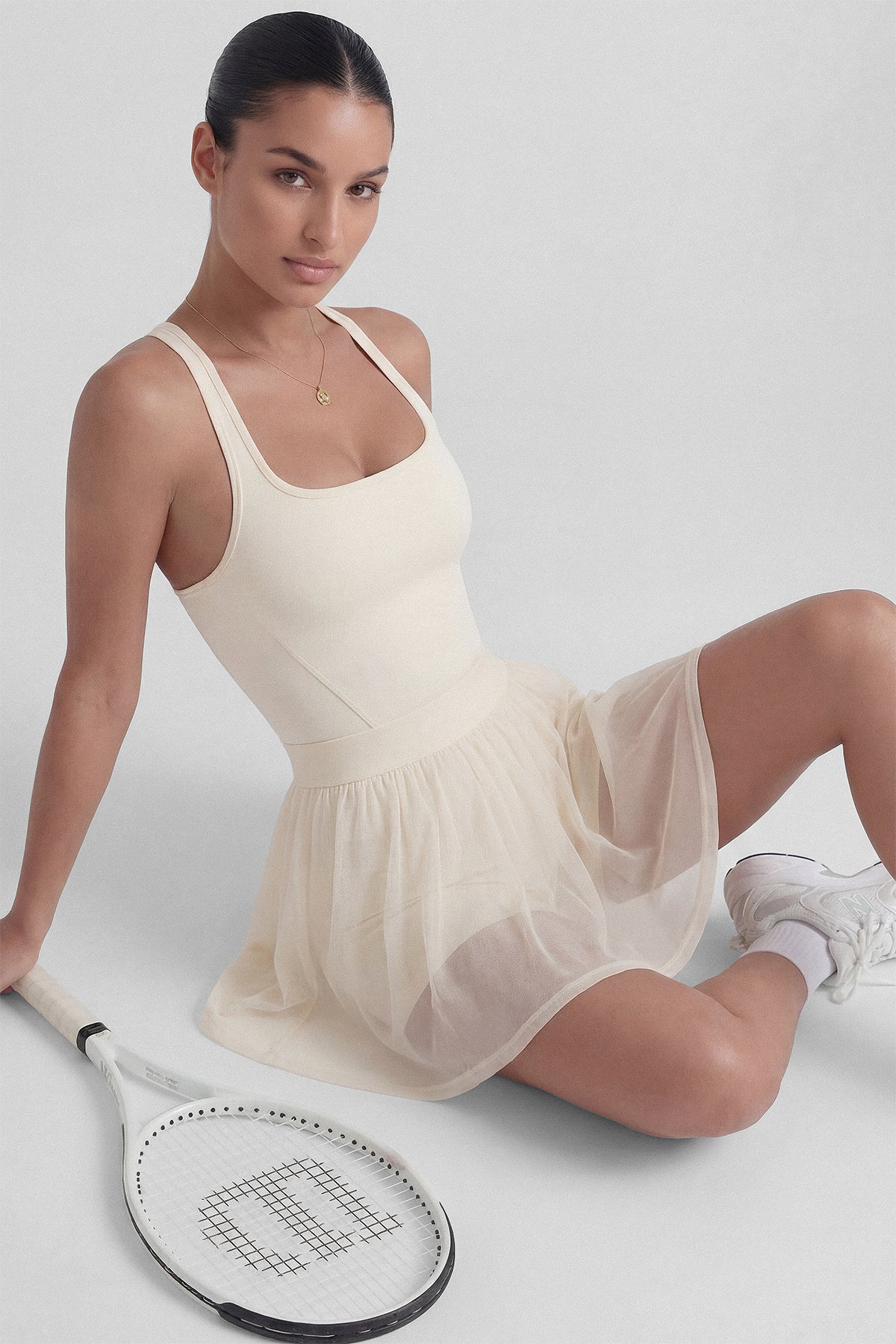
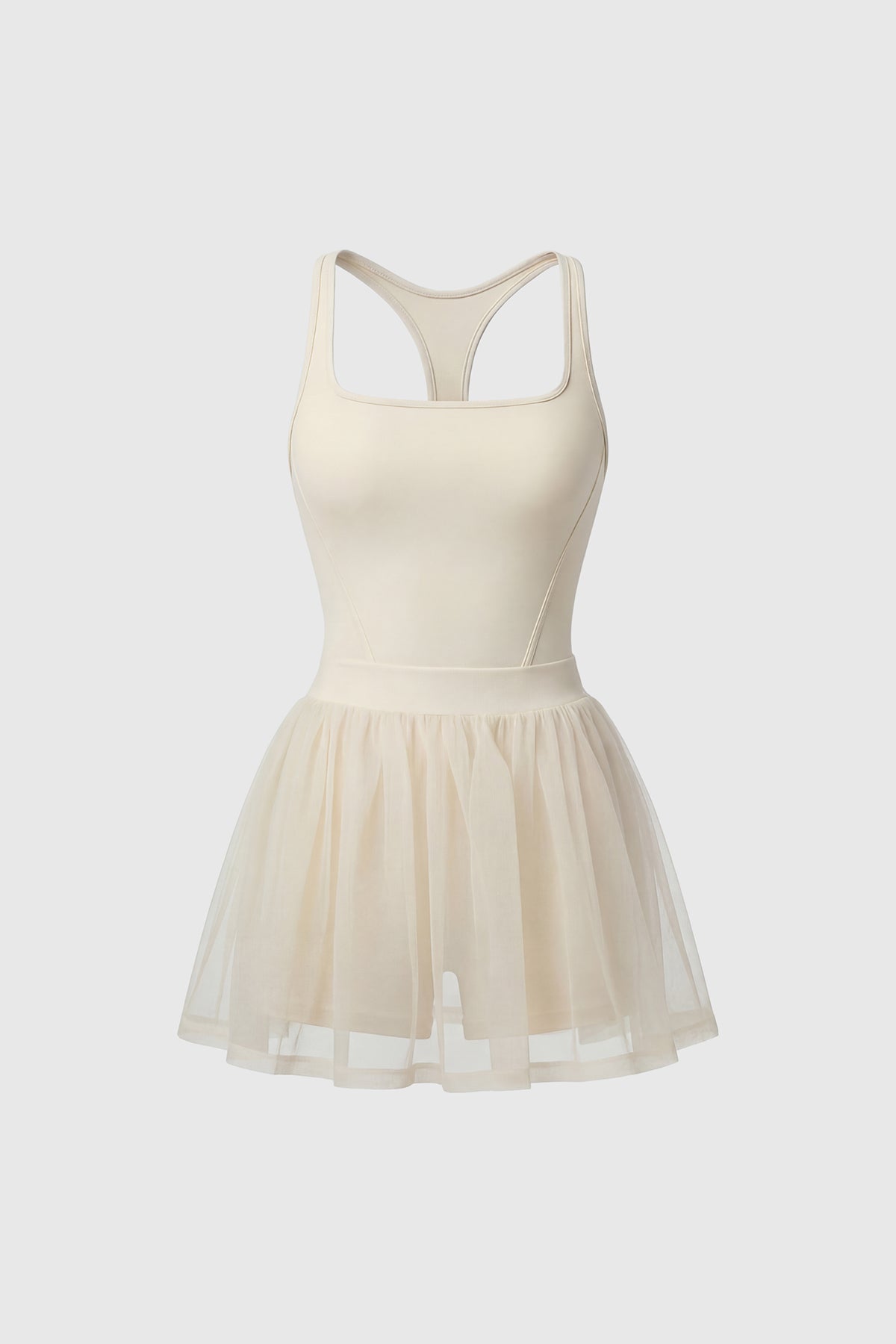
For tennis skirts and skorts, a medium-weight stretch fabric often offers the most versatility. It moves cleanly, keeps its shape and gives the outer layer a polished fall over built-in shorts. For tops, lighter fabrics can work well when balanced with secure straps, considered seaming and enough stretch through the shoulders.
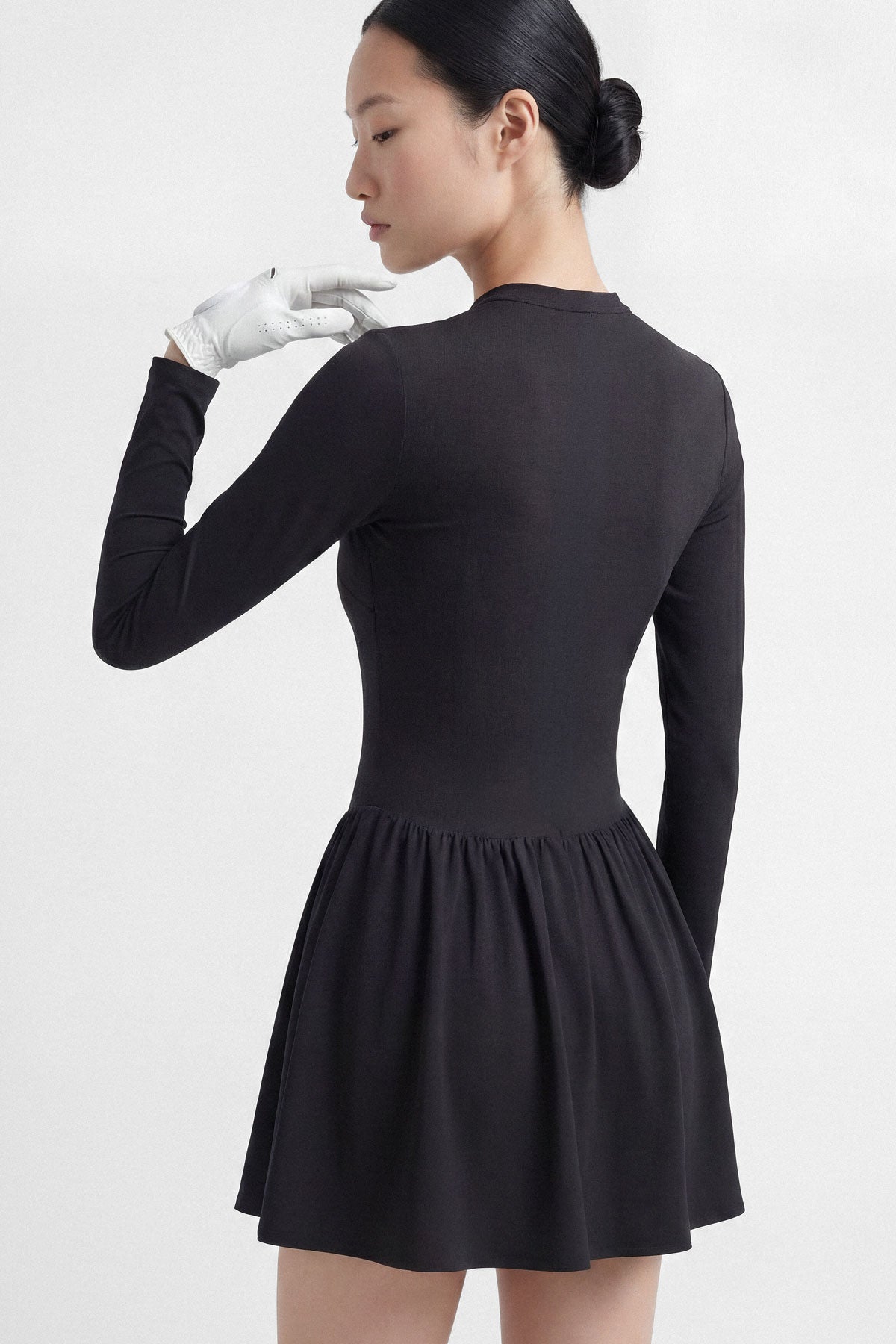
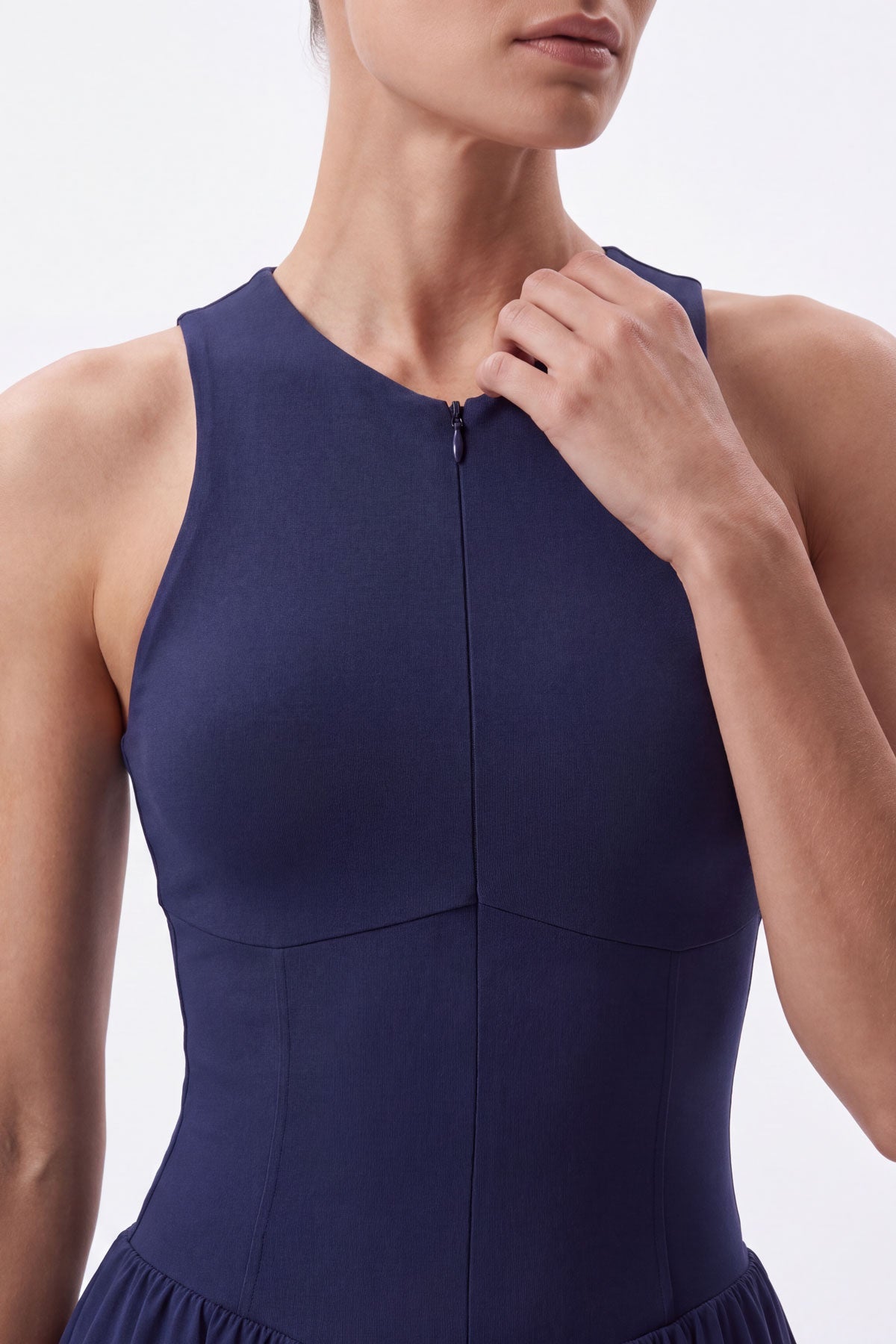
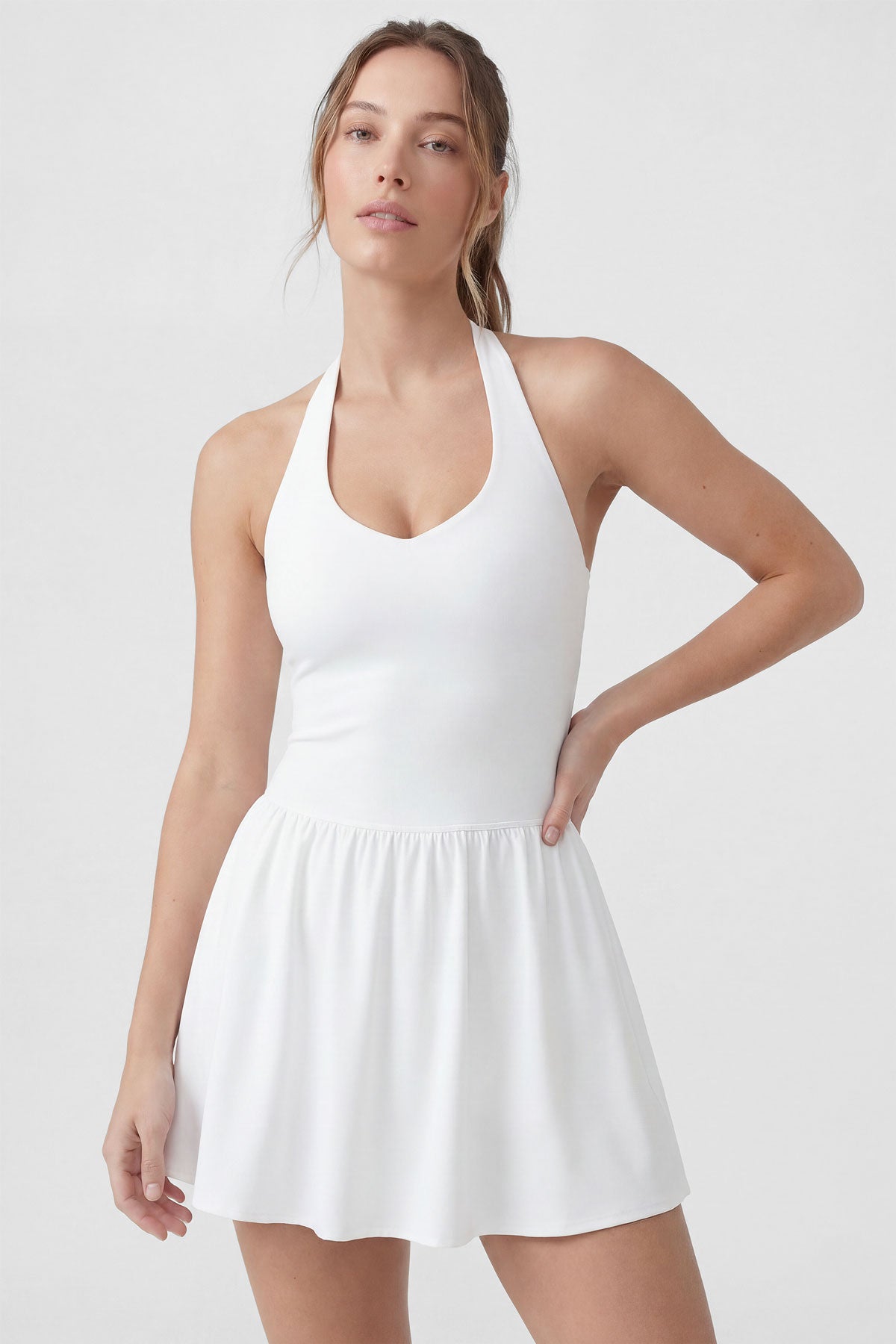
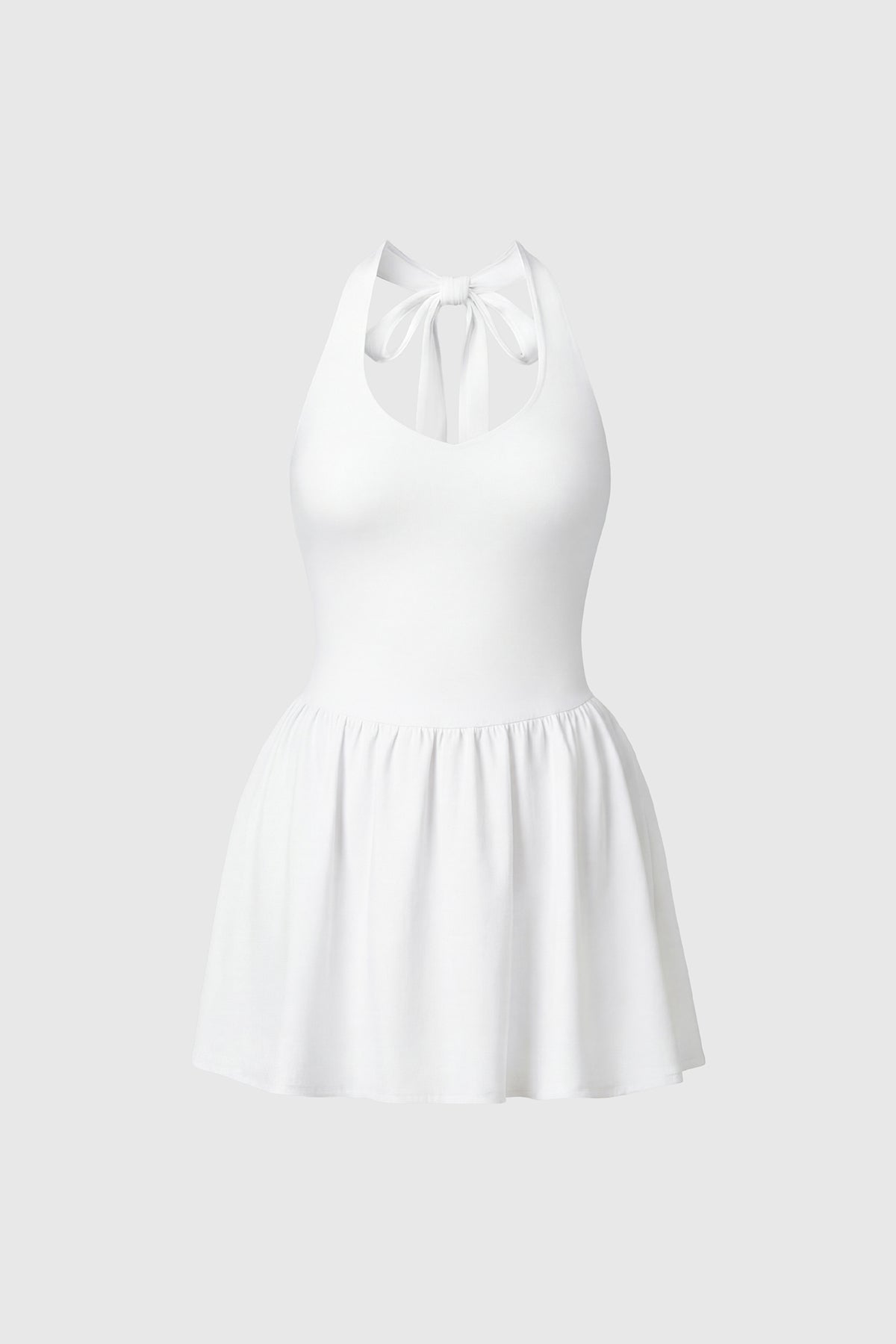
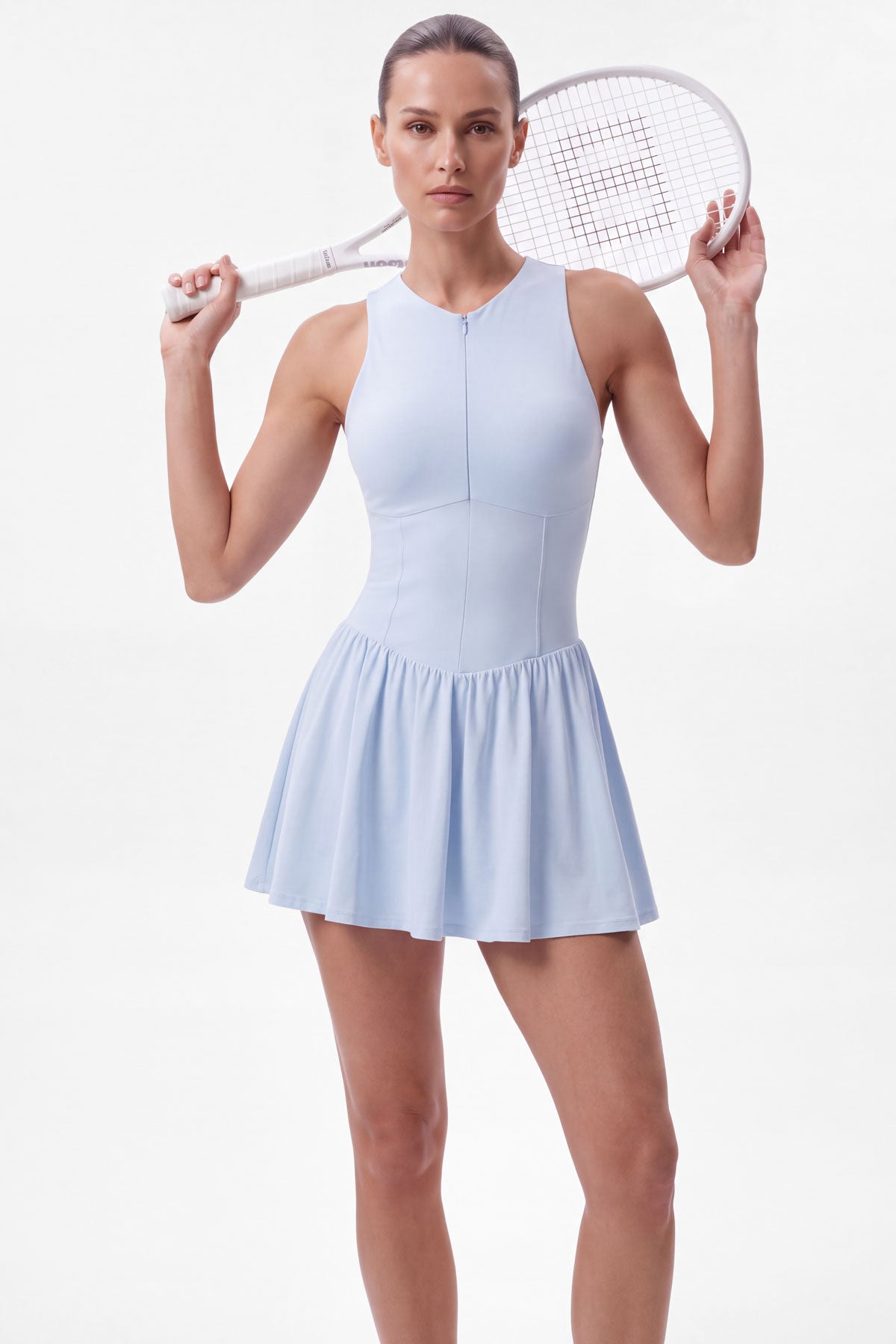
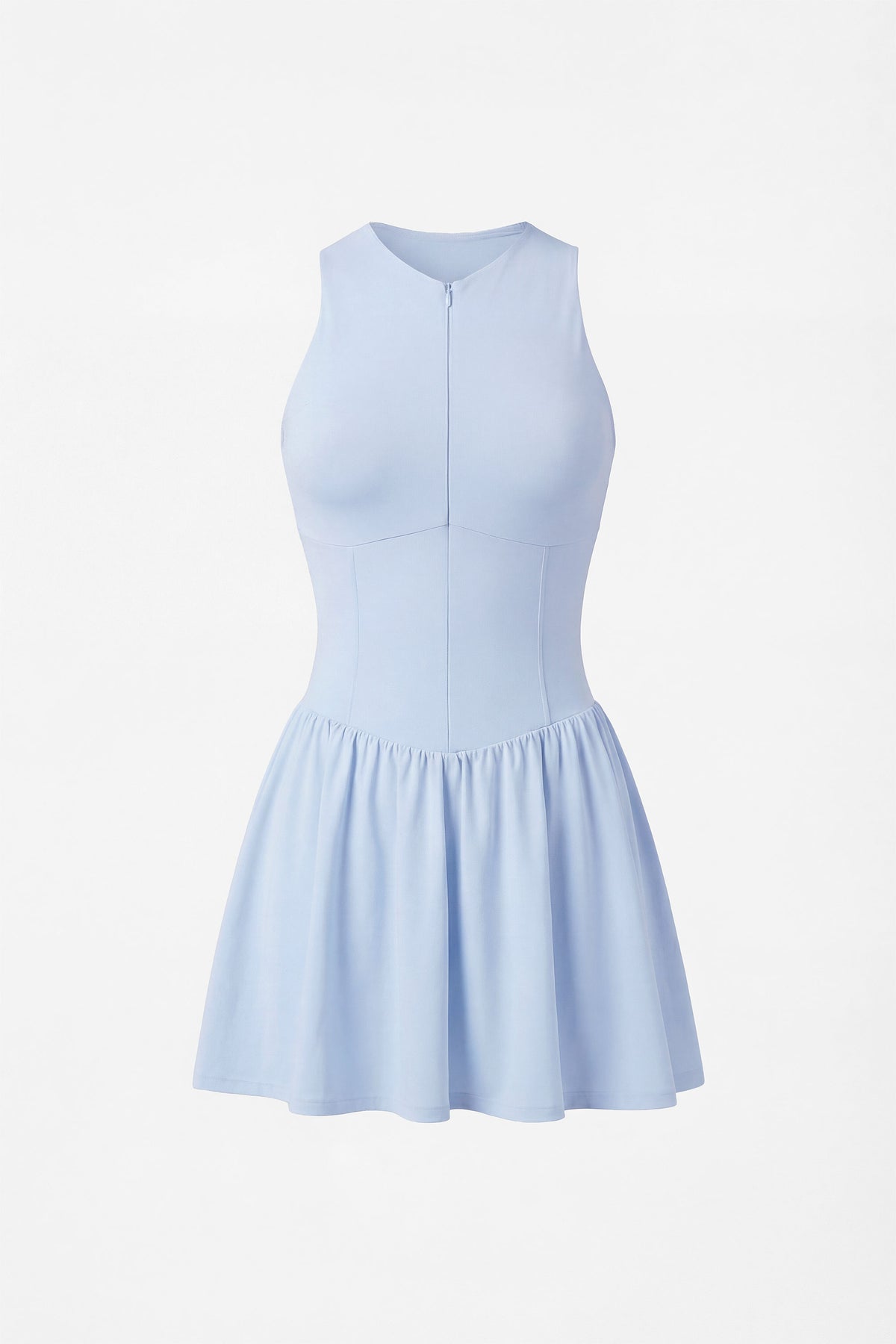
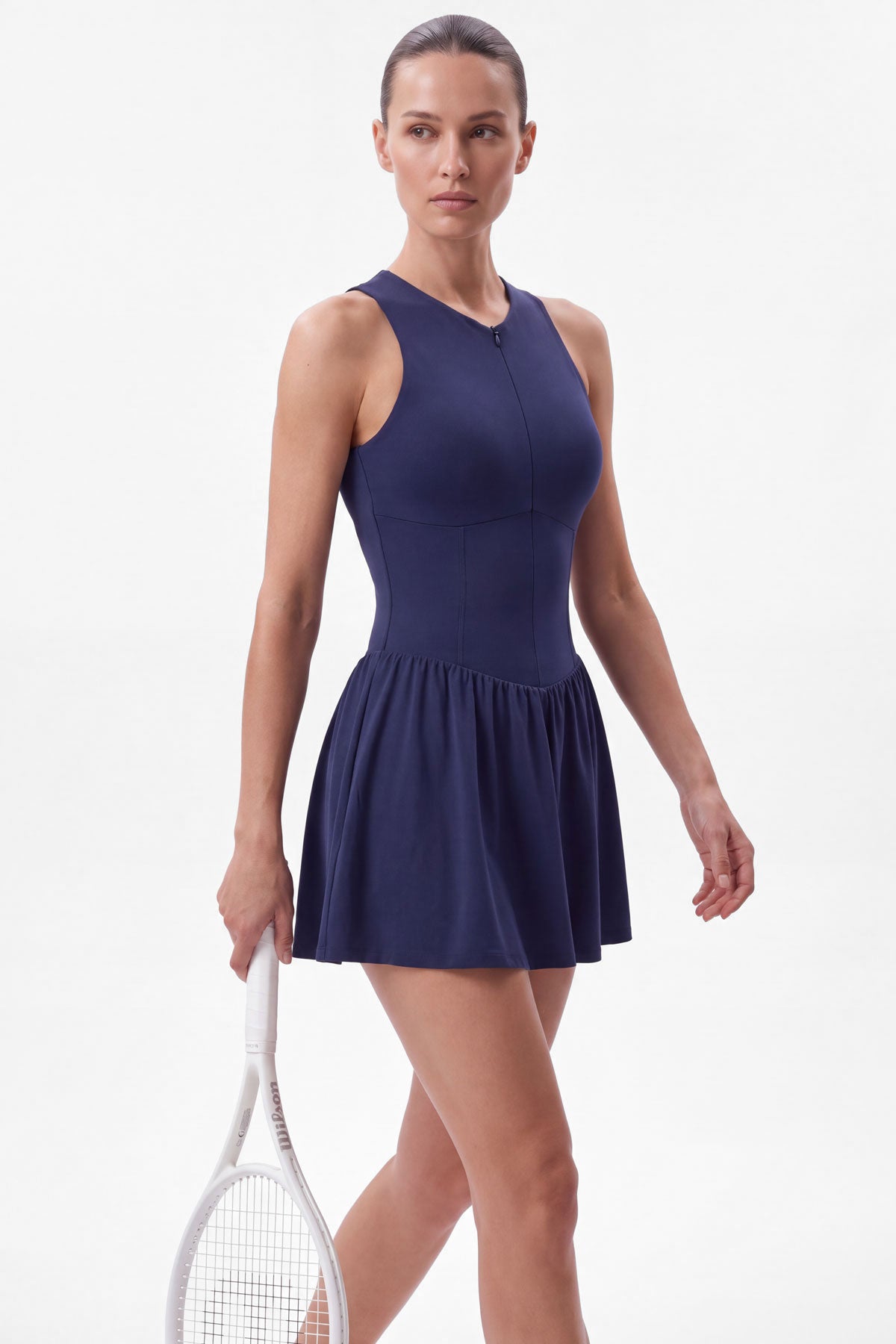
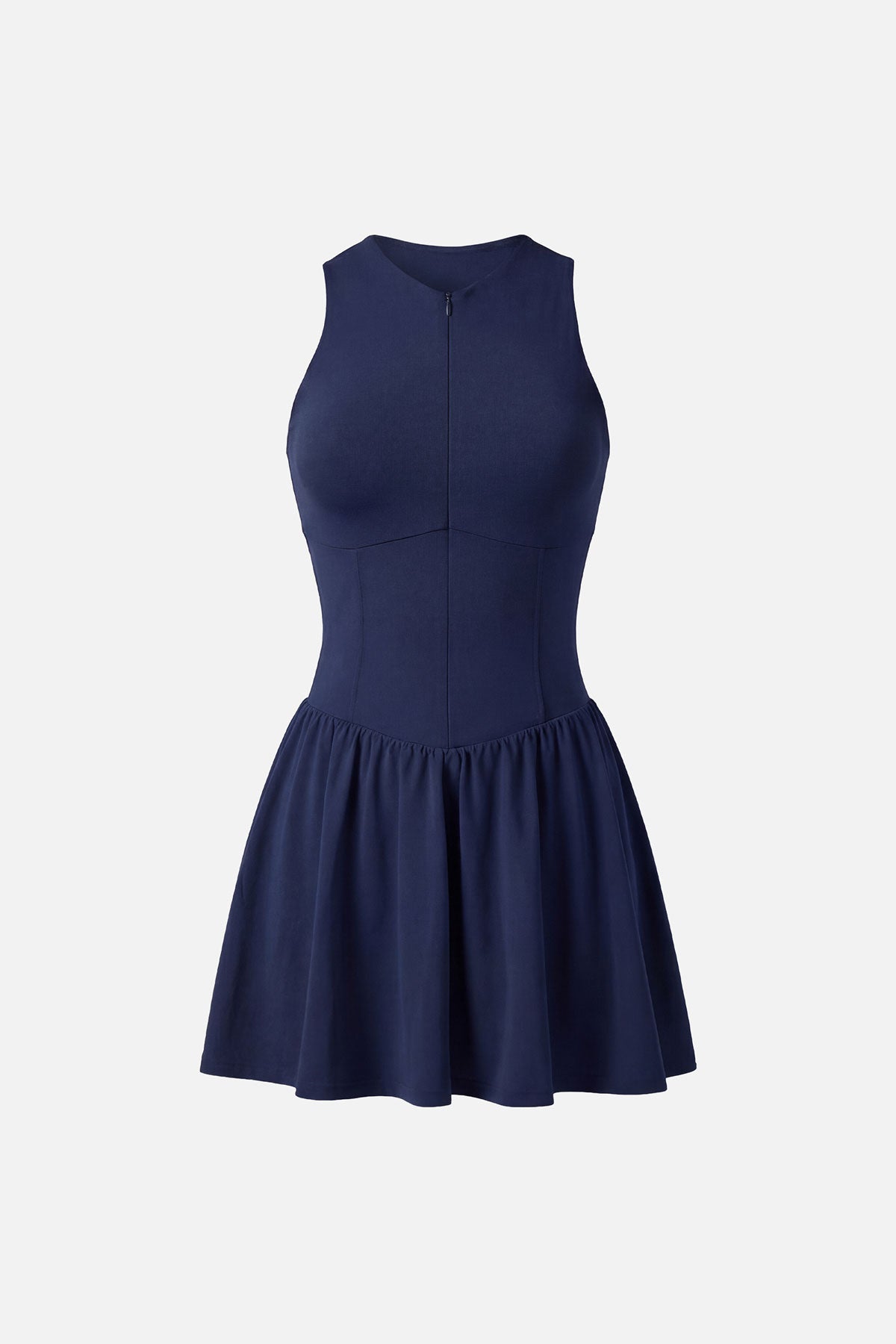
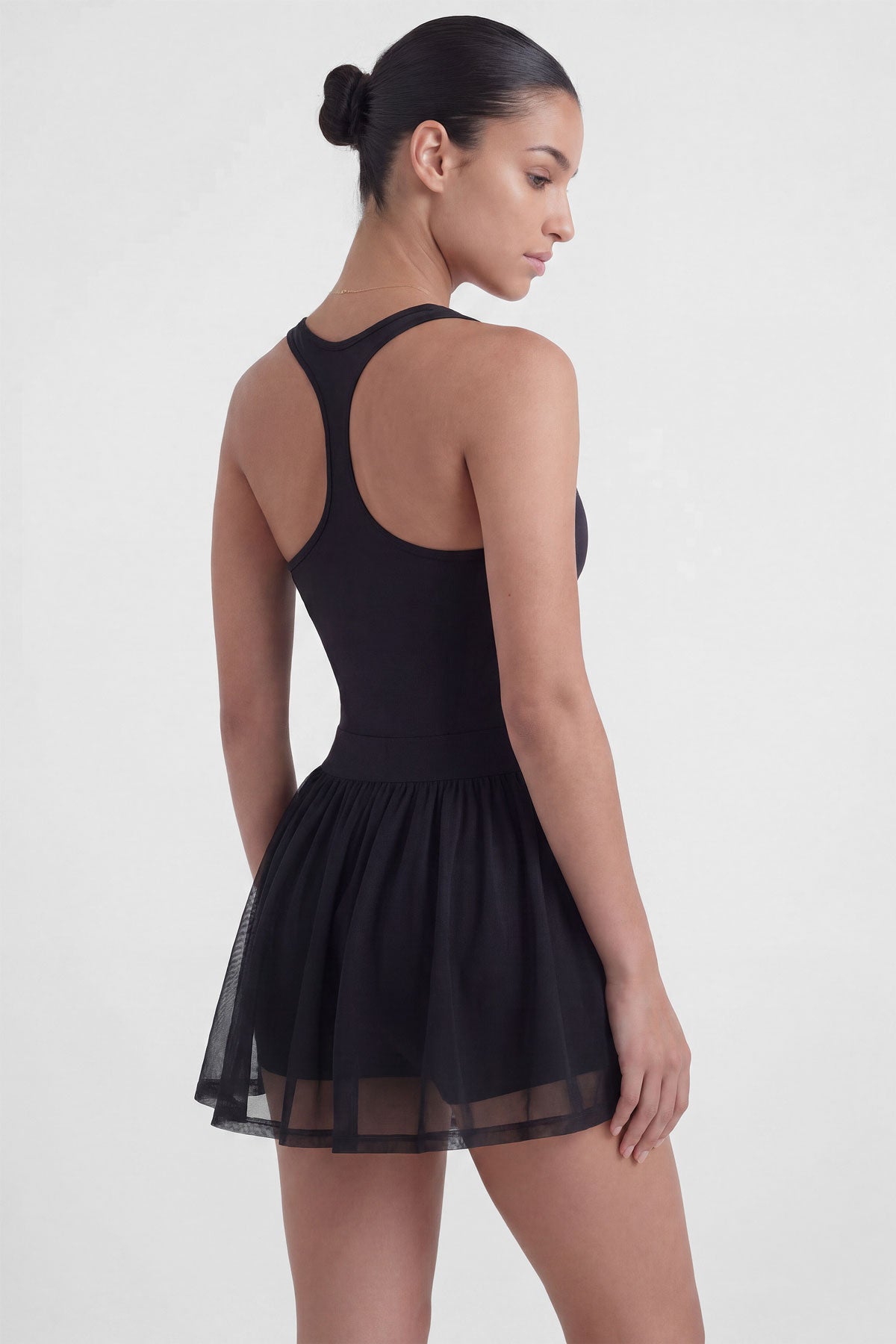
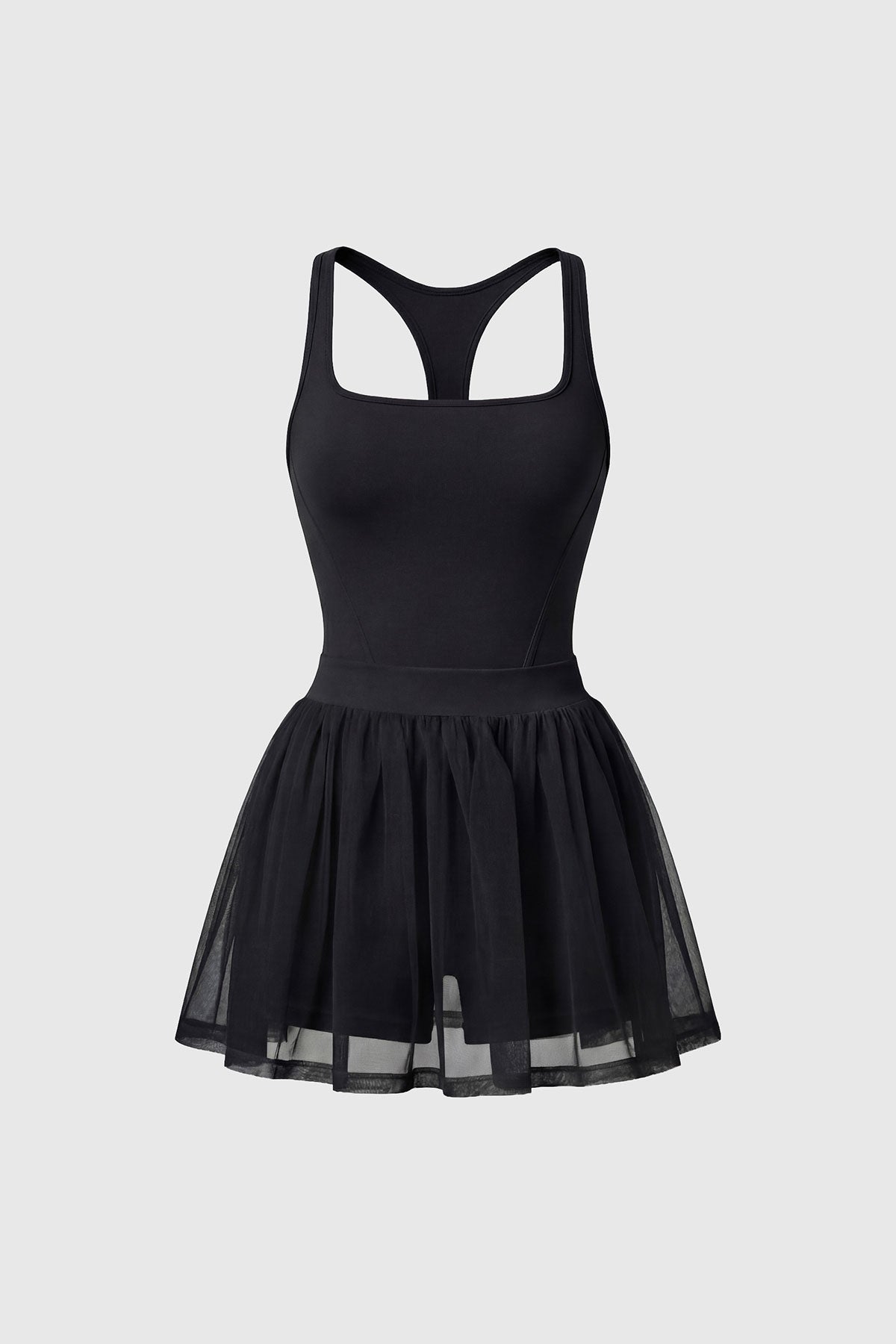
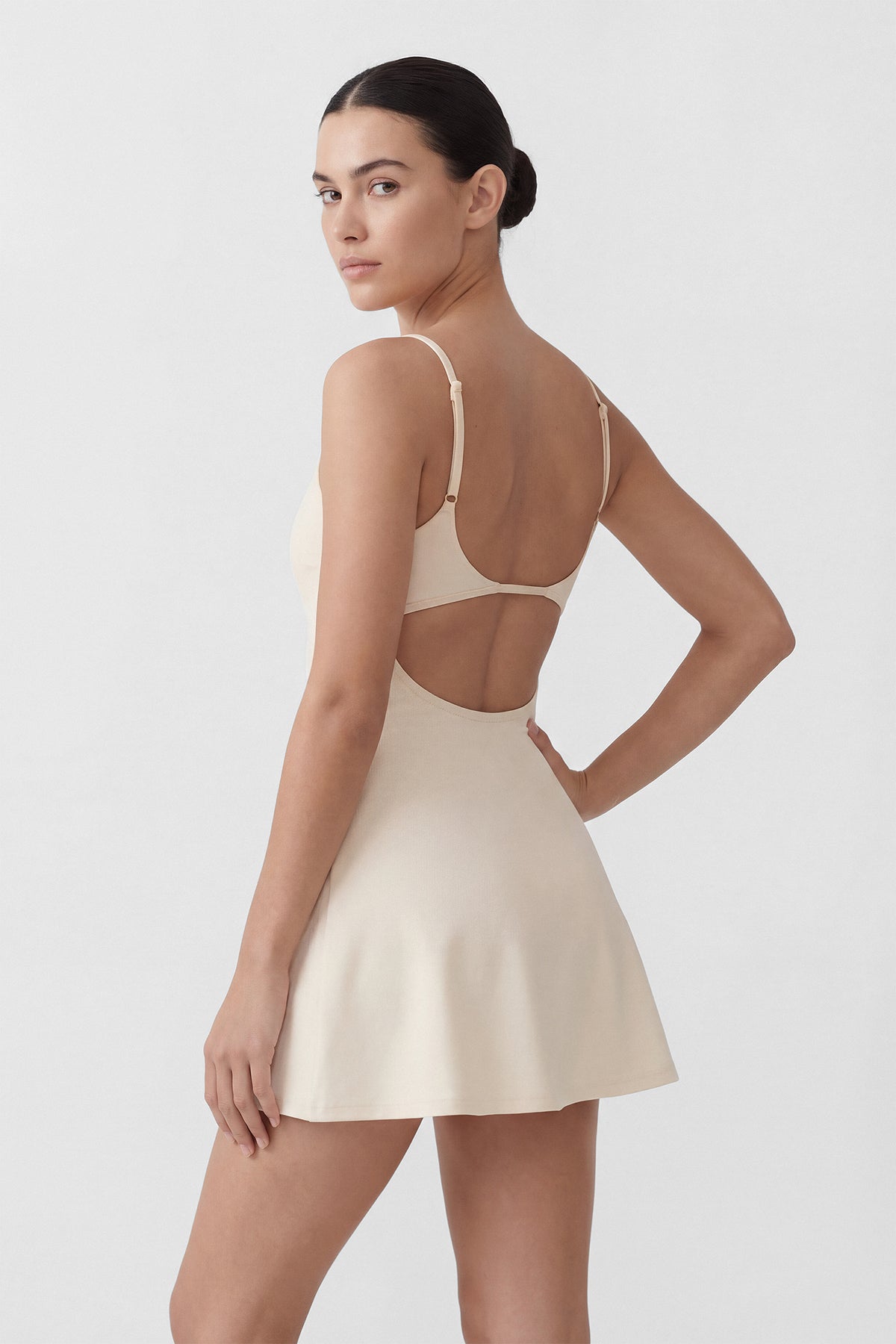
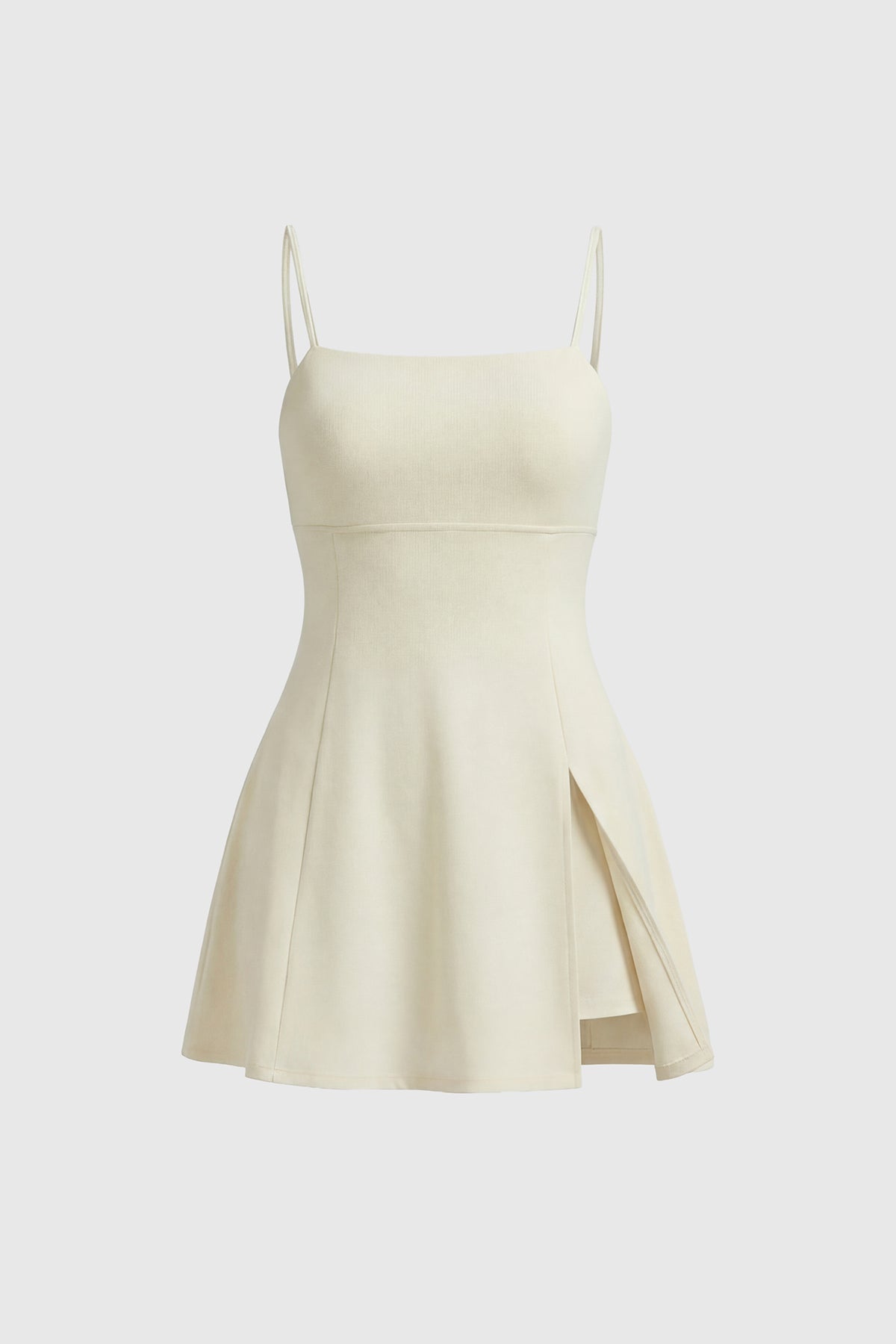
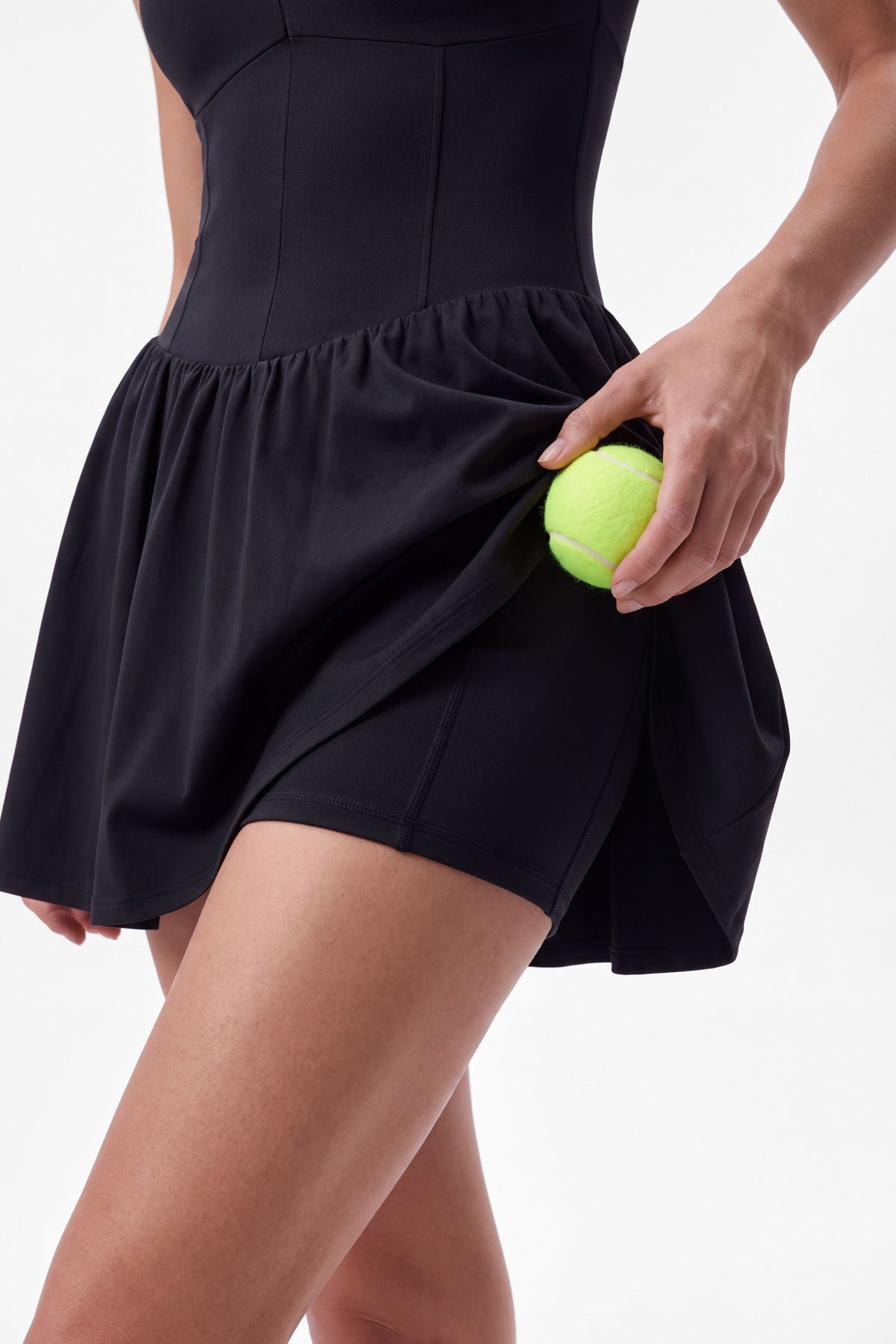
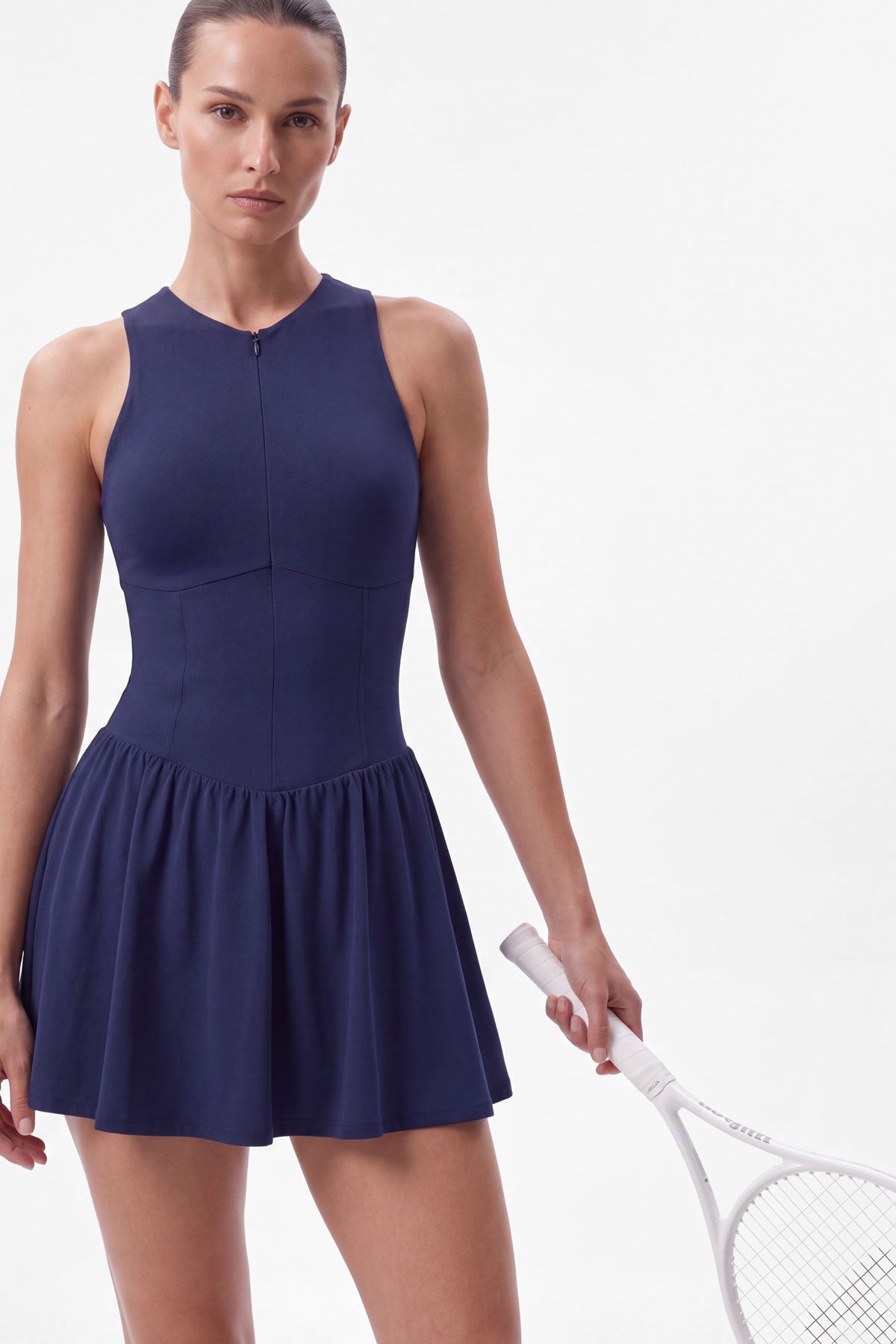
Dresses ask the most of their fabric because they combine upper-body support, a defined waist and a moving skirt in one piece. A fabric with four-way stretch and strong recovery helps the dress maintain its line through play. If it includes built-in shorts, the inner and outer fabrics may be different by design: one focused on a smooth exterior, the other on flexible comfort and practical pocket placement.
Choosing fabric by how you play
Your ideal fabric depends on your court, climate and preferred silhouette. If you play outdoors in warm weather, prioritise lightweight technical blends and breathable detail. For evening sessions or milder conditions, a slightly denser polyamide-elastane fabric can feel beautifully composed without sacrificing mobility.
Consider how you like your clothing to fit, too. Players who prefer a close, sculpted look may gravitate towards polyamide and elastane blends with a smooth, supportive hand feel. If you prefer an easy, fluid silhouette, lightweight polyester blends can offer more movement and airiness. Neither is inherently better. The right fabric is the one that lets you focus on your game instead of adjusting your outfit between points.
Padel can call for similar fabrics, though the enclosed court and fast exchanges make breathable stretch especially welcome. For golf, where the movement is different and the day can be longer, a refined technical knit with a little more structure can carry you comfortably from the first tee to the clubhouse.
Small construction details matter as much as fabric
Even the best fabric can fall short if the garment is poorly constructed. Flat or carefully positioned seams reduce distraction through repeated movement. A stable waistband helps a skort sit neatly through serves and lateral steps. Adjustable straps allow a dress to feel more personal, while removable bra cups offer flexibility in how you choose to wear it.
Pockets deserve attention as well. In tennis, a ball pocket needs to sit securely and remain easy to access without disrupting the line of the piece. Built-in shorts should be stretchy enough for movement while retaining their shape. These details are where a fashion-led active piece becomes genuine court apparel.
At Common Player, that balance is central to the new court uniform: considered silhouettes, purposeful performance fabrics and finishing details that feel as good at the café as they do on court.
How to care for performance tennis fabrics
Technical fabrics retain their best feel when treated with a little care. Wash pieces inside out in cool water, use a gentle detergent and avoid fabric softener, which can leave a coating on performance fibres. Skip high heat where possible and let garments air dry out of direct sun.
It is also worth separating performance pieces from rougher items with zips, hardware or heavy towels. This helps preserve smooth finishes, fine perforation and the stretch recovery that makes a favourite dress or skort feel right each time you wear it.
The most considered tennis wardrobe is not built around one fabric alone. Choose breathable polyester blends for easy movement, softer polyamide blends for a more sculpted finish, and cotton blends for relaxed layers around the game. When fabric, fit and function are in balance, getting dressed for match day becomes one less thing to think about - and one more part of playing well.
Read more
Built in shorts vs leggings comes down to coverage, movement and the sport in front of you. Find the polished option for court and course days with ease.
Minimalist women's sportswear brands pair clean design with court-ready details. Learn what to look for in refined pieces made to move with you.